


Scales for Hazardous Environments
When the engineering team of Básculas Mauri, in Tarragona, Spain, was contacted by a nearby company specializing in the handling and automation of powder to integrate a weighing system into their equipment, several challenges presented themselves. The system would be weighing flour as an ingredient in baking cookies, which may seem like a simple process. However, because flour dust is highly explosive (even more than gunpowder), associated equipment must be treated with safeguards and specific certifications. Secondly, although Básculas Mauri and the engineering company responsible for the product transport (Radar Process) would be able to assemble the system in Spain, they would not be able to oversee installation because that would be handled by the OEM customer in Colombia.
ATEX is a series of directives the European Union (EU) enforces to ensure safety requirements are met in explosive environments. These environments are classified into zones based on the likelihood of an explosion. While flour dust is a high risk when it collects into a combustible cloud, in this application, the phenomenon is unlikely to occur during normal operation or will persist for a short period if it does happen.
Colombia doesn’t have its own directive and chose to adopt ATEX, which meant Básculas Mauri’s system needed to be approved for ATEX Zone 22 dust zones.
Weighing Food In-motion
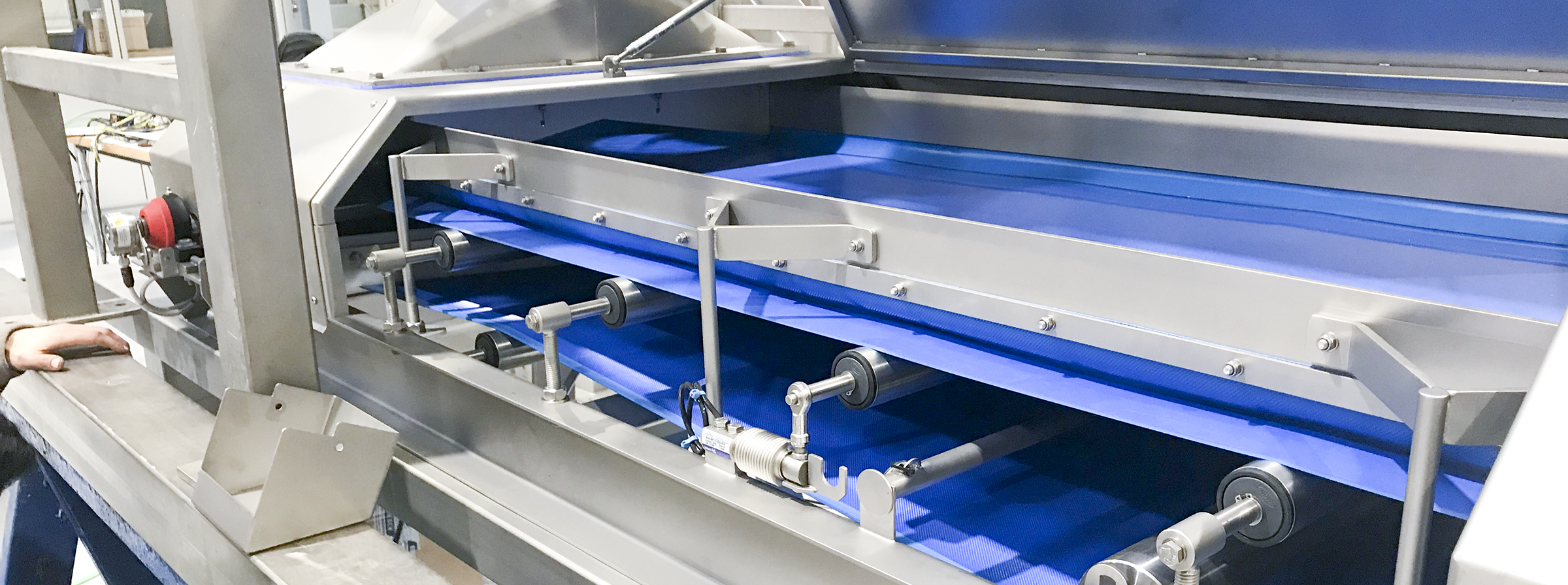
While they had never worked with Rice Lake’s Master™ brand of equipment before, they contacted Rice Lake’s office in the Netherlands which specializes in weighing bulk material in motion. After meeting with Jaap Oosterlee, sales manager for the Master brand, and learning more about the system, Básculas Mauri decided the Master weigh belt feeder was the best choice for the application. “It met ATEX Zone 22 requirements,” explains Oriol Mauri, a software engineer for Básculas Mauri, “and Master weigh belt feeders maintain a consistent flow of material—ideal for applications striving for the highest possible product quality.”
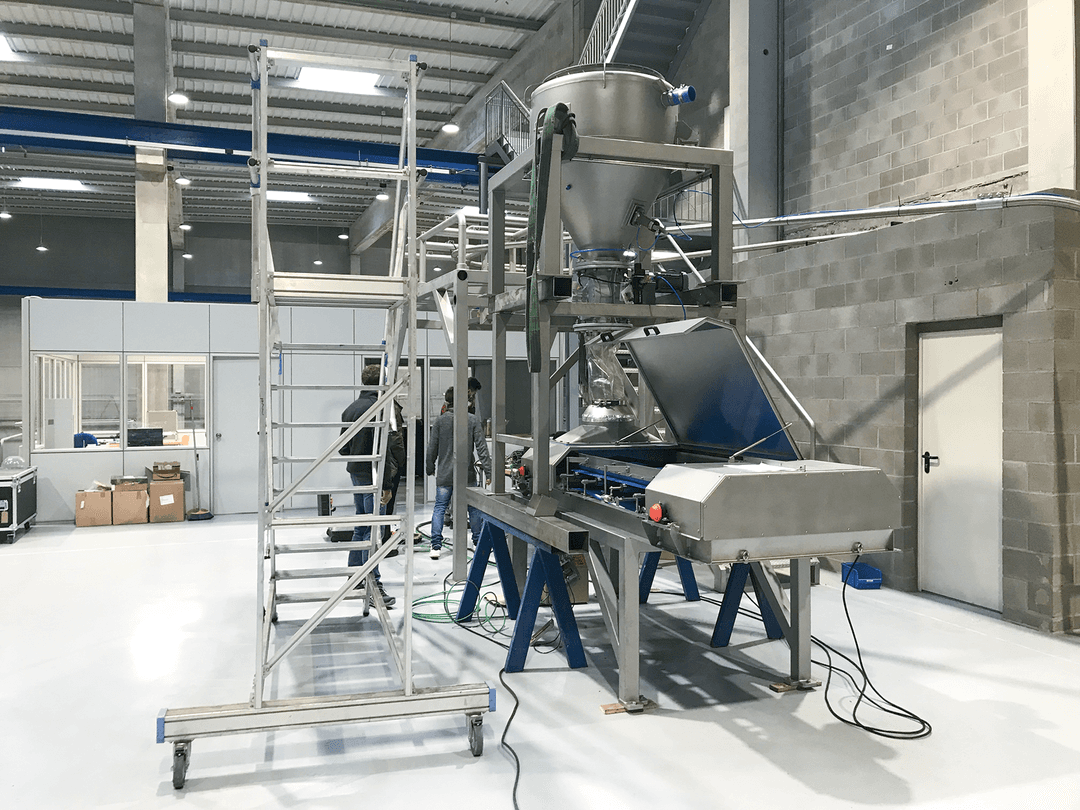
Because Oriol was not able to visit the customer’s site personally, he relied on photos and descriptions to envision the end result. Understanding the process was critical for designing a successful system. The weigh belt feeder would be installed at a port, where flour is offloaded from ships. During the product’s conveyance, it needed to be weighed on a certified Legal for Trade scale to accurately calculate tax fees. The first Master belt scale would be used here, integrating with an aspiration system that cleans the powder and removes lightweight impurities from the batch.
After taxes are determined and the flour is aspirated, it moves through a pipeline and is weighed a second time afterarriving inside the factory. Básculas Mauri and Robitec developed a custom software to capture weight data through ProfiNet and work with the customer’s ERP, data and automation systems. They assembled the equipment based on the customer’s specifications and shipped it to Colombia for installation.
“I was a little nervous that something would happen between Spain and Colombia,” Oriol remembers. “Although the equipment was very secure and well-packed, it’s a long voyage and these are sophisticated machines. Thankfully, everything arrived safely and they had very little trouble with installation.”
