Passionate Care
Brazos Valley Equine Hospital opened their doors in 1987 in Navasota, Texas when Dr. Terrell “T-Bone” Buchanan saw the opportunity to take new strides in his passion for healing horses. The teams at BVEH approach equine care on a relationship-by-relationship approach, building trust with animals and their owners to provide the best long-term care. Brazos Valley has multiple facilities to provide proper care and treatment to a large number of horses in Texas.
The team at the Salado location is skilled in surgical procedures, foal health and treating a variety of health threats including laminitis and metabolic issues. Dr. Shannon Darby started working with BVEH in October 2021 and she practices internal medicine with a special interest in foal health and growth. She provides a combination of hospital and off-site treatment, allowing her to see the housing conditions of the animals and determine if they are impacting animal health.

Dr. Jamie Ashbrook has been with BVEH since an internship in 2016 and now focuses on preventative medicine and treatment plans for horses facing endocrine and metabolic issues, as well as laminitis. Equine Metabolic Syndrome (EMS) and pituitary pars intermedia dysfunction (PPID), sometimes called Equine Cushing’s disease, are both weight-related illnesses that have been linked to laminitis.
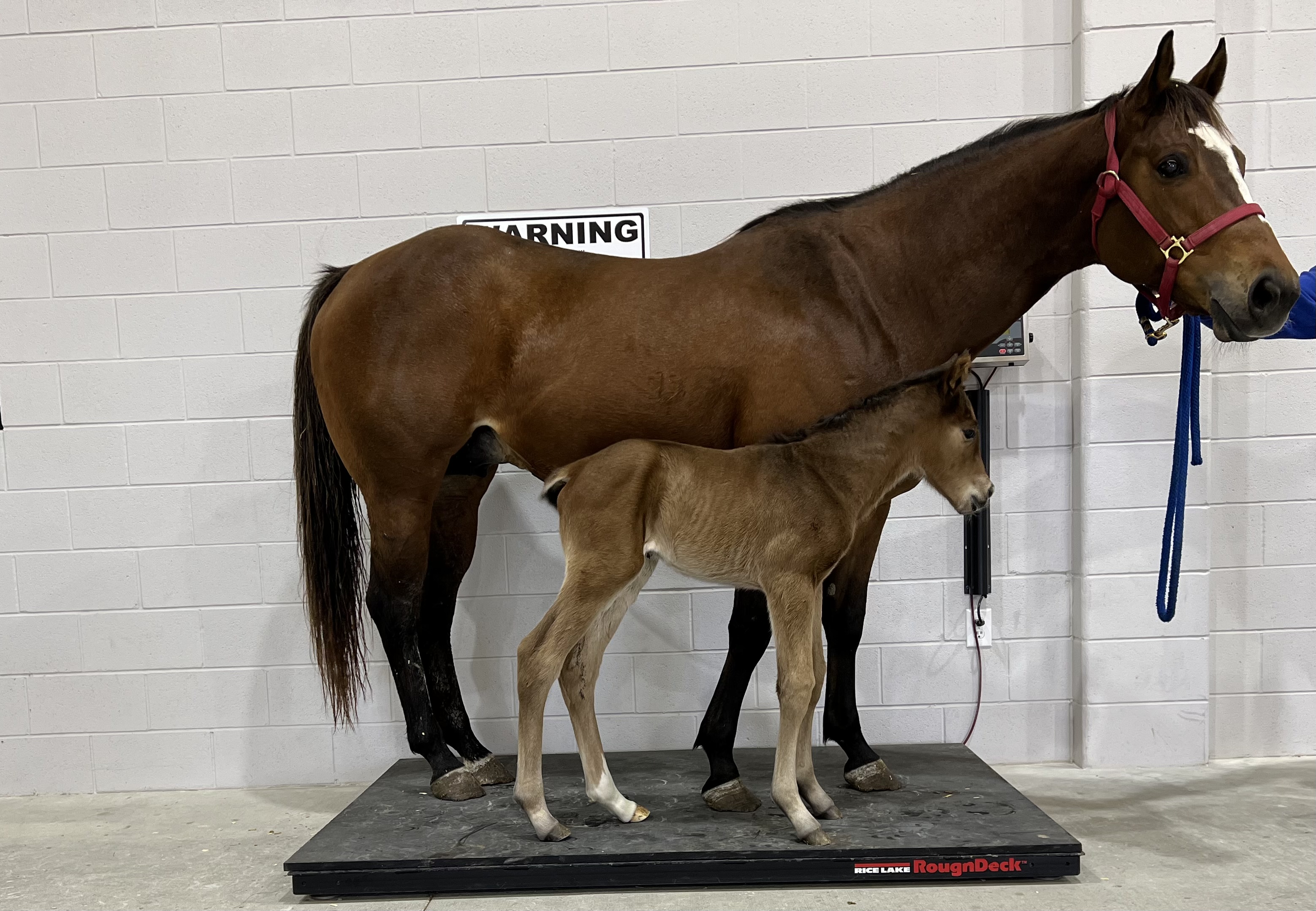
The surgical team at Salado relies on accurate weights for anesthetic dosing; even small changes in the dose can make a huge difference. When you’re treating everything from miniature horses and donkeys to draft horses, an accurate scale makes a big difference.
No Horsing Around with Accuracy
It’s common for owners to underestimate their horse’s weight, in part because they may not notice the gradual weight increase when they see the animal every day. For animals with regional weight adiposity, accumulations of fat cells commonly around the neck and tailhead, the only way to accurately capture weight is with a scale. Weight tapes don’t measure weight adiposity and can only provide estimates for many animals. Average size does not mean average weight for all horses.
When deciding what scale to add to their facility, BVEH staff worked with Midwest Veterinary Supply to find the right fit. Midwest Veterinary Supply has been providing a variety of animal care solutions since 1961. They worked with BVEH to understand their weighing needs and recommend the best scale for their facility.
Salado BVEH staff planned to install the scale along a wall in one of their treatment barns. It has a concrete floor and contains a large lameness pad, holding stalls and a large area to work the horses for baseline movement analysis. Staff wanted to be able to lead horses to the scale along the wall and around the lameness pad.
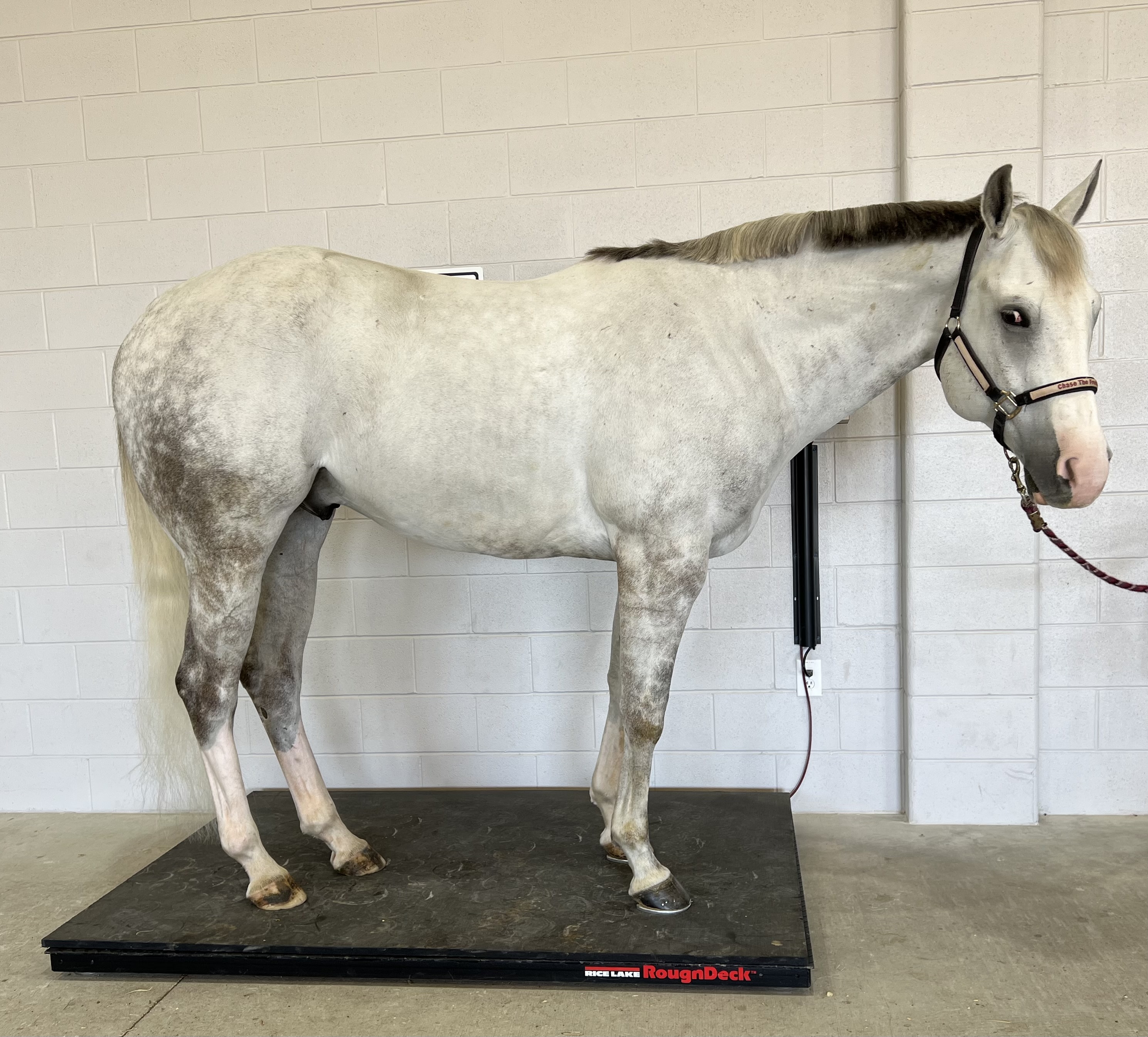
After reviewing several models, BVEH staff chose Rice Lake Weighing Systems’ RoughDeck® EQ equine scale and 482 Legend Series weight indicator. The RoughDeck EQ has a durable steel frame, low profile and an easy-to-use weight display perfect for operations at BVEH.
Dr. Ashbrook said the low step up has been easy for their patients to use. She has seen models that are taller and require long, sometimes thin ramps most horses don’t like to walk on. The RoughDeck EQ’s included stall mat prevents slips which is crucial when treating patients with laminitis or joint issues, but it also reduces noise to help keep skittish patients calm.
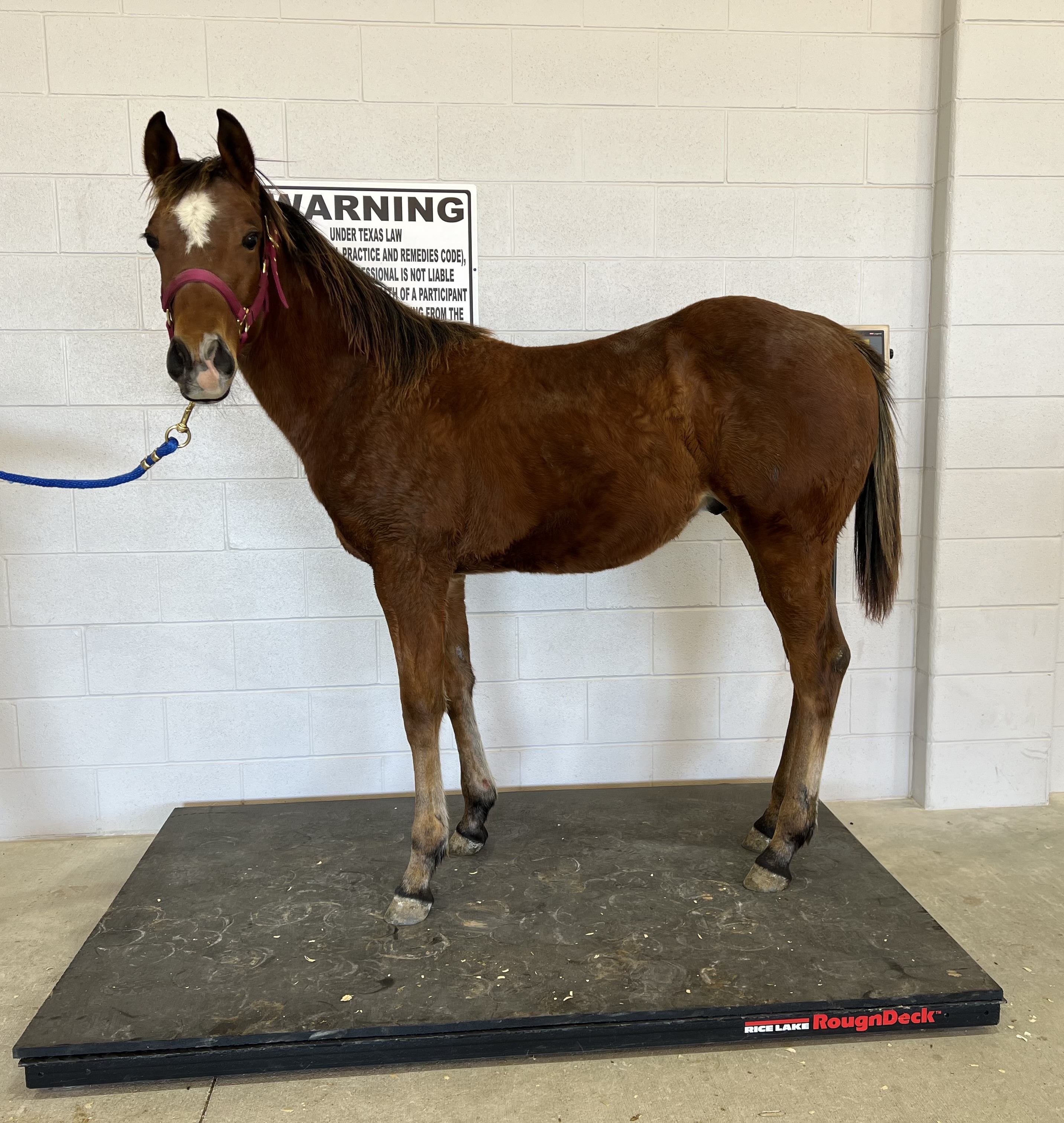
Some horses can be claustrophobic if they’re led to close to a wall, but the RoughDeck EQ has a platform of 4 feet by 6 feet, giving animals enough space to comfortably stand on the scale. Dr. Darby said, “most of the horses are champs [using the scale] because they’re used to trailer loading. The yearlings get a little spooked, but with patience it works well.” Dr. Ashbrook agreed and added that yearlings who are still learning can stand diagonally on the scale, keeping their faces away from the wall while the veterinary team records their weight.