When walking the streets of the Netherlands, one can't help but be taken by its beauty. Charming brick homes and businesses complement the lush, green countryside. When scanning the surroundings with an eye for construction, one can’t help but notice that just about everything is made of brick. Not only are dwellings comprised of them, but bricks also support manmade landmarks, such as clock towers and the 1,000+ iconic windmills (once necessary to pump water from waterlogged acreage and transform swamps into habitable land). Even the streets and walkways are paved with a seemingly endless supply of intricately woven bricks, flowing like reddish-brown rivers into the horizon of the Maryland-sized country.
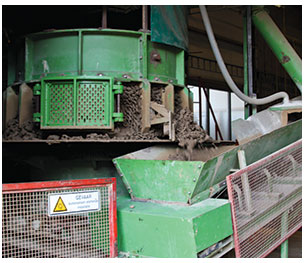
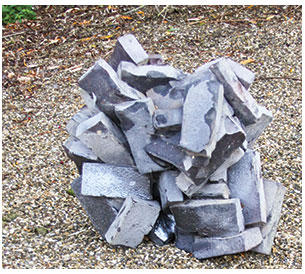
In the city of Haalderen, the factory Wienerberger has been making bricks for over 150 years. A great deal has changed in the past century and a half, but their formula for making specialty bricks has remained the same, and is a closely guarded secret. Most European bricks hold the traditional red color, and most brick factories can produce only this color or subtle variants. However, Wienerberger has the unique ability to modify color based on specific customer requests. Their most coveted brick is a unique slate-blue color, used for high-end luxury houses and offices. In a sea of red monotony, slate blue stands out like a prestigious peacock, proclaiming a distinctive message: I am special. However, the bricks are difficult to make, and any imperfections can ruin an entire batch. Wienerberger’s manufacturing process was exponentially more difficult because no scales were being used. It was more art than science, and as a result, ruined batches were an unfortunately common (and costly) occurrence.
In 2010, Wienerberger had enough. They re-evaluated their processes and determined that scales would be a great benefit to reduce errors and increase batch repeatability. The factory manager, Colin Ferguson, contacted Master Engineering, well-known as batching and in-motion weighing specialists throughout Europe. That year, the first of Wienerberger’s two production lines received an upgrade.
Jaap Oosterlee, sales manager for Master Engineering, implemented a BS611 belt scale and loss-in-weight system (LiW), unique to the industry which is typically dominated by less-precise flow meters.
Regardless of whether flow meters or scales are used, the most important element in creating the perfect brick is using the correct mixture of clay and additives. The clay-to-additive ratio, and which additives are selected, controls the brick’s attributes such as strength and color. The exact amounts of manganese, lime, or coal are integral, and if the batch isn’t consistently colored it has to be thrown away. However, it wouldn’t be very stylish to simply toss them in a dumpster. Instead, Wienerberger decided to construct
sculptures out of the discarded bricks and put them on display. A tangible metaphor for the inconsistency of the old system, these sculptures are scattered throughout the facility yard—forming a walking gallery of brick bloopers.