Global steel production is dependent on coal. Steel is an alloy based primarily on iron. As iron occurs only as iron oxides in the earth’s crust, the ores must be converted, or reduced, using carbon. The primary source of this carbon is coking coal. Nearly all of the coke produced in the world is fed into blast furnaces to make steel. World crude steel production was 1.2 billion tons in 2009. Around 761 million tons of coking coal was used in its production.
Canada annually exports about 30 million tons of coking coal and uses an additional 6 million tons domestically. On behalf of Canadian coal, steel, and metal producers, CanmetENERGY conducts research and development on metallurgical coal and coke technologies including energy recovery from coke production, metallurgical coke, bio-coke, and research into Canadian coal. CanmetENERGY’s coal evaluation, preparation and carbonization facilities are available to industry on a fee-for-service basis to assist with mine planning, marketing and economic investigations; to ensure low risk to expensive facilities during coking; and to evaluate the quality of coke, coal and other alternate fuels including biofuels for metallurgical purposes.
Kirby Wittich, CanmetENERGY research engineer, explains, “On every continent, there is metallurgical coal, junk coal and excellent coal. It depends on the particular seam. We are looking for very particular bituminous coals. A very quick bench-top test can be done. We grind the coal up and heat 1 gram of it to about 800 C in a small crucible. After two minutes we take the lid off. If it is coking coal, we’ll see a little muffin. If it is not coking coal, it may look exactly as it did before—just powder.
“Some coal may coke at a certain temperature, and another at a different range. When we mix those together we have a mixture that cokes at a wider temperature range. The price difference between coking coal and coal that would be used in a combustion furnace can be five to ten times. If a mine shows that they have coking coal, then often a huge investment is made to mine that coal.”
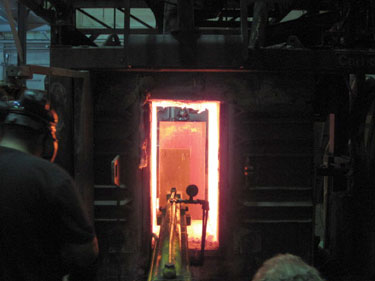
There are two kinds of coke producers: integrated and merchant. Integrated coke producers are affiliated or owned by a steel manufacturer; merchant producers are those who produce coke to be sold on the open market. Kirby tells us half of CanmetENERGY’s tests are done for steelmakers and half are for Canadian coal mines that sell coking coal to steelmakers. “We test the coal they send us in the proportions they suggest. But instead of a 4- or 6-meter high furnace, we test it in a furnace a little over 1 meter high by adjusting conditions. Among other things, we are testing to find the force of the wall pressure on the coke oven, because most of the coke ovens in the world are old. If there is too much pressure on the oven wall, it will crack and leak, and they take many millions to fix.”