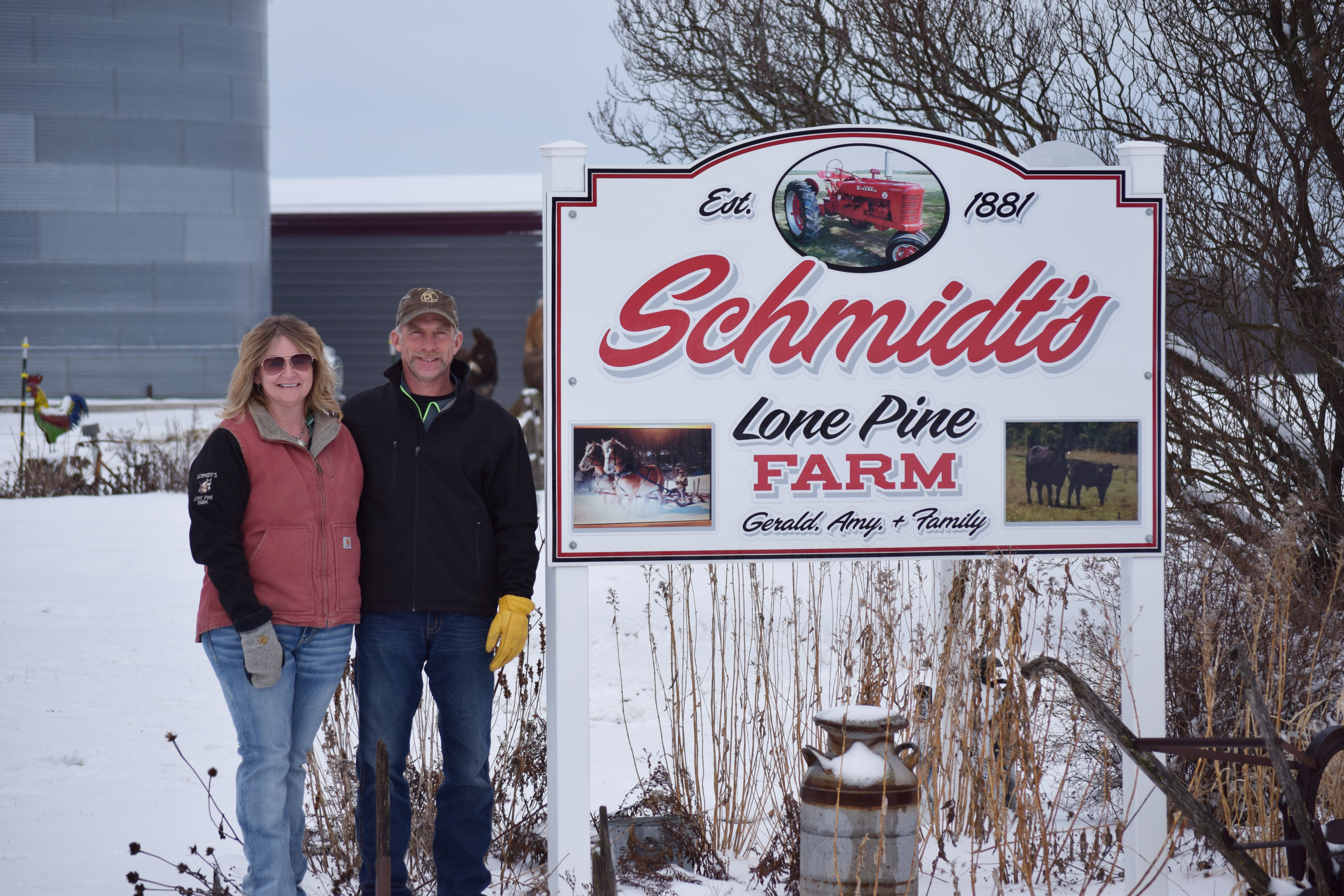
Gerald, Amy and their three boys all have their hands in farm operations, and it has always been a sense of pride to the Schmidt family, serving as the cornerstone in almost every aspect of daily life. In recent years, Lone Pine Farm transitioned from dairy farming to raising beef cattle and crop farming. “When we sold the dairy cows, we needed something else on the farm we could watch grow,” says Amy. “Just knowing you are raising animals out on the farm is the best feeling.”
Gerald and Amy raise beef cattle every year and sell their calves as feeders. “We usually have around 50 calves every year. That’s the amount we like to stay at with the amount of pasture we have; it is the most profitable for us to keep the farm around that number,” says Gerald. In addition to the beef cattle herd made up of Angus, Limousin and Simmentals, Lone Pine Farm is also home to horses, donkeys and pigs. Every animal has a role in the farm’s operations, and is loved by the Schmidt family. “The calving season is a lot of fun to raise the babies and watch them grow,” says Amy. “The best part is watching the calves interact with their moms. The mom can make just one call, and the calf knows—oh, that’s Mom’s call.”
Amy and Gerald’s three sons Josh, Colten and Chase have grown up helping on the farm and appreciating the hard work involved. During calving season, the cows are watched closely and checked on many times throughout the day. “We all take turns checking the cows, and that includes our youngest son Chase, who comes home from school and rides the ATV out to check on the animals. Since he was 12 years old, I remember him bringing home a friend to help tag new calves. They thought it was just the greatest thing to work with the cattle and be farm kids. Family is huge for us. It’s all done with family,” says Gerald.
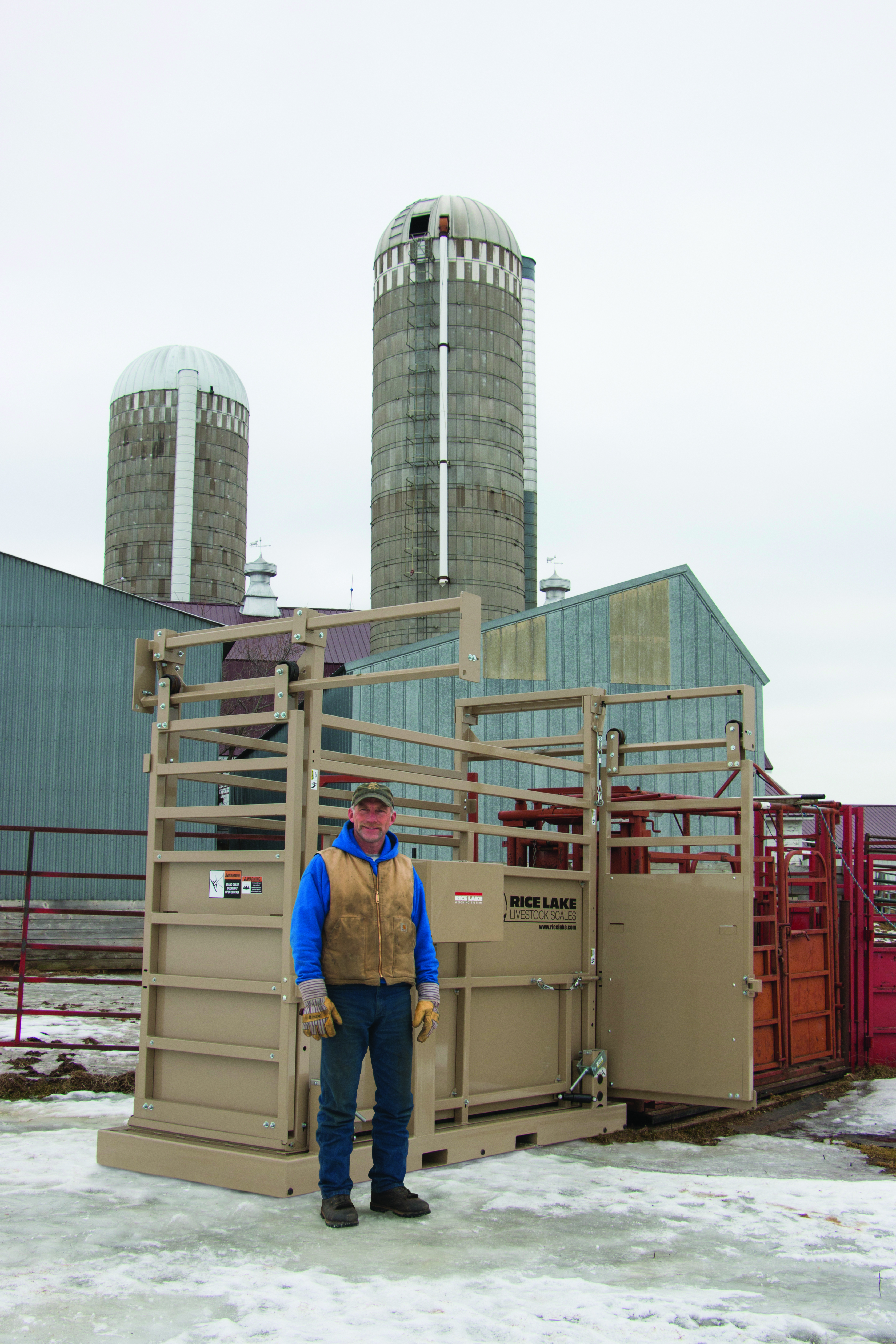
Running a family farm is a lot of work, and every piece of equipment on the farm needs to pull its own weight to contribute to operations. Not only does farm equipment need to withstand harsh environments and the demands of hard work, it needs to be relentlessly reliable. With beef cattle, every sale comes down to weight. Making sure his feeders finish out at their best weight is key to Gerald. “We sell our calves in the winter after weaning them. To us, it’s important for them to be as heavy as they can—that means coming across the scale at about 800 pounds.”