


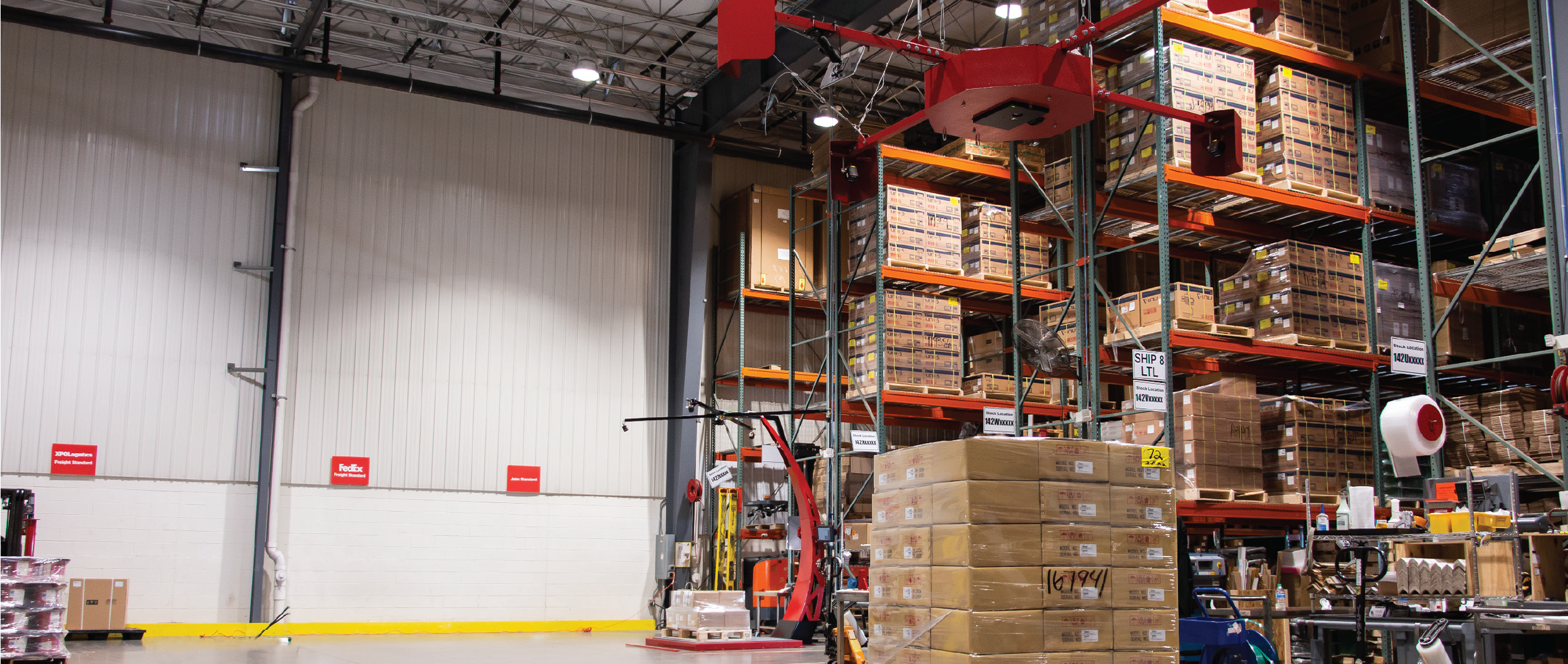
Measuring a pallet with a tape measure sounds easy, but it’s difficult to accurately measure bulges, protrusions and irregular shapes of real-world freight. It often leads to errors that result in incorrect density and freight misclassification. When carriers use scales and automatic dimensioning systems to audit shipments and determine whether the correct freight class was selected, it can lead to costly adjustments and lost revenue if the weight or dimensions were not accurately declared by the shipper.
The Cost of Reclassification
Most carriers audit between 40% and 90% of the freight they receive. This means that if you’re currently shipping 25 pallets each day, your carrier could be auditing anywhere from 11 to 22 pallets to verify freight classification. If the carrier finds weight or dimension errors, they may choose to audit all of your freight.
On average, 35% of audited freight is found to have been misclassified due to inaccurate weight or dimensional measurements. This means that if 11 of your pallets were audited, approximately four would be flagged and reclassified at your carrier’s facility, possibly leading to revised charges.
Carrier chargebacks can range from $50 to $250 for each pallet that is reclassified. If each of your four reclassified pallets received a $125 chargeback, that equals $500 worth of charges in a single day. If you consistently ship 25 pallets every day in a typical work week, you could incur $2,500 worth of extra charges in a week, or $130,000 in a year.


With this average shipping volume, you could achieve ROI on a pallet dimensioner in just a few months. By implementing pallet dimensioning systems similar to what your carriers use for audits, you can ensure you’re capturing Legal for Trade measurements and selecting the correct freight class every time.
By choosing a dimensioning system that includes high-resolution cameras, you will have images of freight as it leaves your facility, documenting its condition and verifying that it was properly packaged and wrapped. This will allow you to hold your carriers accountable for any damage to your freight. Using Legal for Trade systems will often lead to carriers noting that your freight doesn’t need to be audited. This boosts efficiency for carriers and can result in lower shipping rates for you.