The Science of Sniff
Purdue University Department of Animal Sciences' mission is to educate students and to research efficient and sustainable production of animal products that optimizes animal wellbeing and promotes sound environmental practices. Associate professor, Brian Richert, Ph.D., is conducting nutrition trials to develop a diet that will lessen air emissions from large commercial hog-raising facilities. Dr. Richert explains, "In the past, trials were conducted using hogs at several different facilities, each being fed an experimental diet and measuring the air emissions at each facility and comparing those results. But that wasn't very satisfactory because conditions were not identical at each facility. Each had different ventilation systems, different handlers and different methods used by the research teams.
According to the National Pork Producers Council, currently there are more than 67,000 pork operations, a fraction of the nearly three million hog farms that punctuated the roadsides in the 1950s. However, the majority of these (53 percent) now produce 5,000 or more pigs per year. Not only are there fewer hog farms, there is far less farmland as communities make their claim for housing and golf courses. Not surprisingly, when the wind blows in the direction of those neighbors, complaints can be heard all the way to city hall. Lawsuits and government regulations have forced the swine industry to address what is "blowin' in the wind."
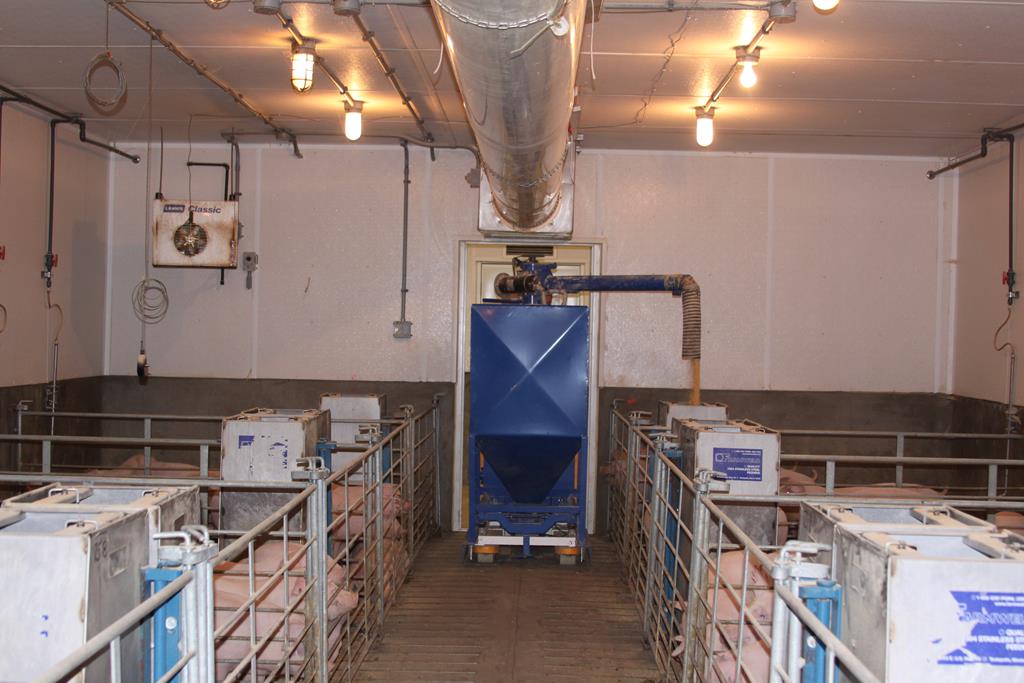
"We built this research facility in 2004. This is called a 'hotel-style' facility. It has a large central hallway separating 12 self-contained units housing 60 hogs each. The idea here is to raise hogs under the same roof and conditions, without co-mingling the atmosphere."
Dr. Richert smiles, "Actually that's a good question. Of course Beano would not be cost effective. An enzyme would have to work on the undigested compounds of the particular diet being fed. Ways to reduce nutrient excretion creating the odors are needed. One strategy is minimizing nutrient excesses by more closely meeting the pig's actual needs."
Dr. Richert investigated several feed systems before he settled on the self-propelled Mosdal feed carts equipped with Rice Lake 390-DC indicators. "One of the possible solutions we looked at was using a feed kitchen and conveying the food to the separate rooms, but that would have co-mingled the environment and also would have cost a great deal of money.
"Another solution was to feed the various diets from 50-pound bags brought to each unit. We feed 500 tons a year. That method would also be costly. The cost of the feed sacks alone would come to $10,000 to $12,000 a year. The cost of the manpower and sore backs is also a big item. Kansas State University had a custom Mosdal Multi-Feed System that worked well for their operation, so we gave Jarred a call." Dr. Richert figures the Mosdal system saves 50¢ per bag or a penny a pound.
Mosdal Scale Systems designed and built a system that includes 12 hoppers, each containing a custom diet and one containing a control diet. The custom hoppers can be loaded on a self-propelled pallet jack equipped with a scale and Rice Lake 390 indicator. The hopper is tared and each group of hogs is fed the proper weight of custom diet. The "wall air" from each unit and manure pit emission is piped to a computer room where it is sampled, analyzed and recorded.
Reductions in odor and gases often come at the expense of weight gain and other desired characteristics. So the research goes on to find cost-effective, growth-enhancing, efficiently digested swine nutrition. Masking agents, bacterial preparations, feed additives, chemicals, oxidation processes, air scrubbers, biofilters, and new ventilation systems continue to be studied.
We have to ask a silly question, "Why don't you feed the hogs some Beano®?"
So far, the Purdue University group has been able to reduce emissions by a breathtaking 40 percent. The results of the trials have been made public in reports, and the commercial feed industry has been able to apply the findings and reduce air emissions by 20 percent.
The Search for Healing
Hickory Ridge Research & Consulting Facility, West Lafayette, was our next stop. Here, owners and operators Dr. Karen (DVM) and David Lehe conduct swine trials for pharmaceutical companies. Dr. Lehe is a highly respected veterinarian in the field of swine medicine and is the principle investigator on the research trials run through the barn. David Lehe, Karen's husband and partner, manages the day-to-day operations of the facility. David is a good hand with data collection and handles the management side of the business with the acumen acquired with his business degree.
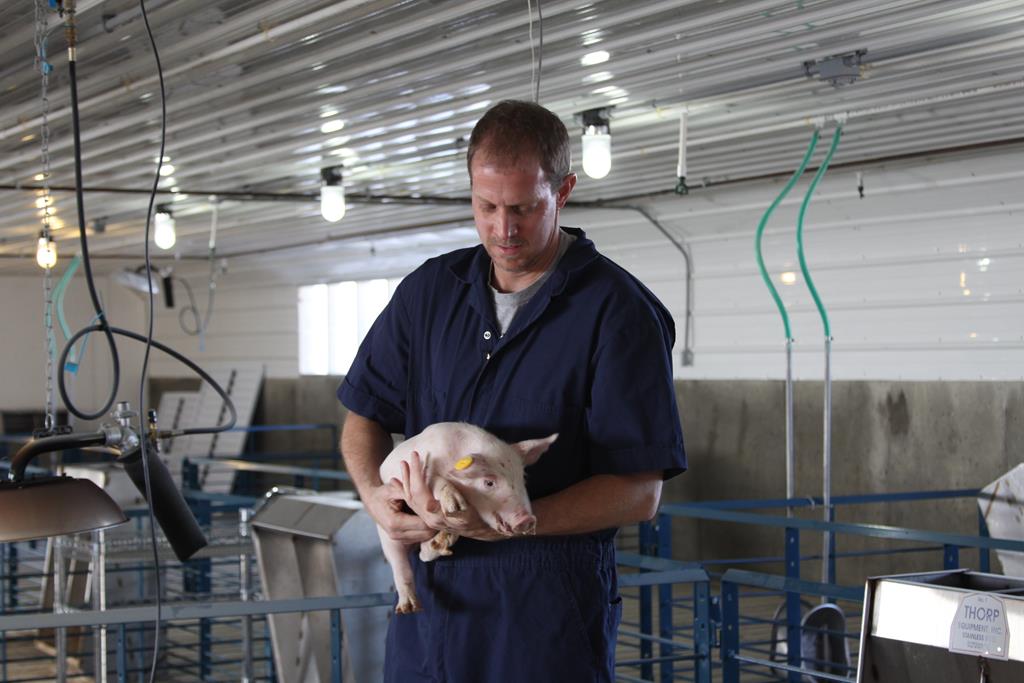
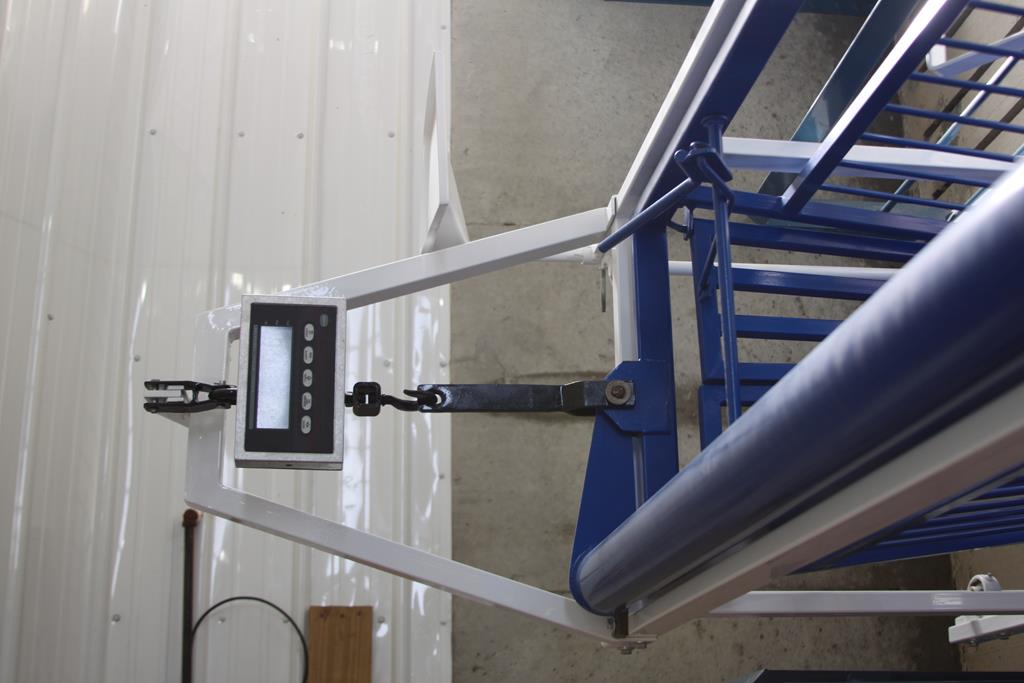
Their facility is as clean as a hospital, so we need to "shower in" after promising we've been "out of hogs" for at least three days to meet the stringent biosecurity requirements. The barn is populated with several pens of baby pigs for the pharmaceutical trial they are running during our visit. The current trial is a disease challenge study, and the pigs are divided into three groups: Challenged/Untreated, Challenged/Treated, and Control(Unchallenged/Untreated). They can do a variety of studies in the research barn, including comparison studies of disease treatment and prevention, molecular discovery studies, post-approval studies investigating new uses for approved products, as well as growth studies. Dr. Lehe says, "At Hickory Ridge, the service we provide to our customers is generating and collecting data that they will use to sell their products. It is absolutely essential that we have tools like the Mosdal pig scale to generate accurate and reliable data."