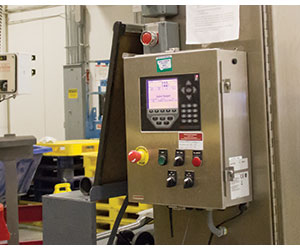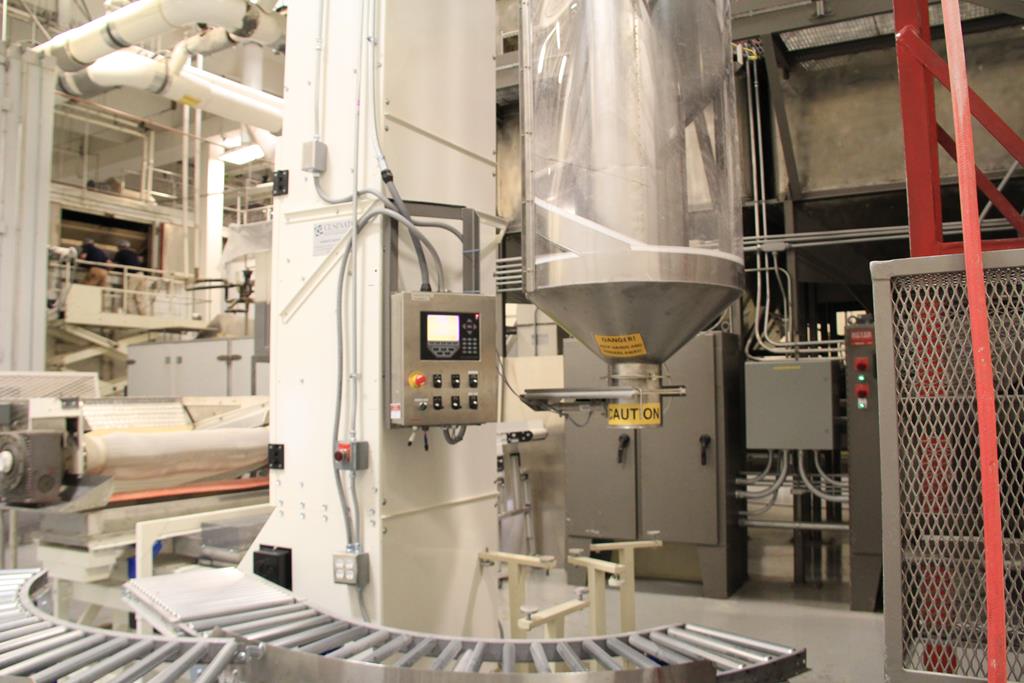
When Claude Smith became plant manager of Pasta Montana in 2010, he immediately noticed areas that needed improvement. Bulk containers weighing between 500-1000 pounds were being manually filled and adjusted to reach specified targets. “It was a very time-consuming and inefficient process,” Claude explains. “We set the empty container on a floor scale, weighed it, and then scooped product in and out until we got the right weight. People were using their best guess to predict the overshoot or undershoot on the scale.”
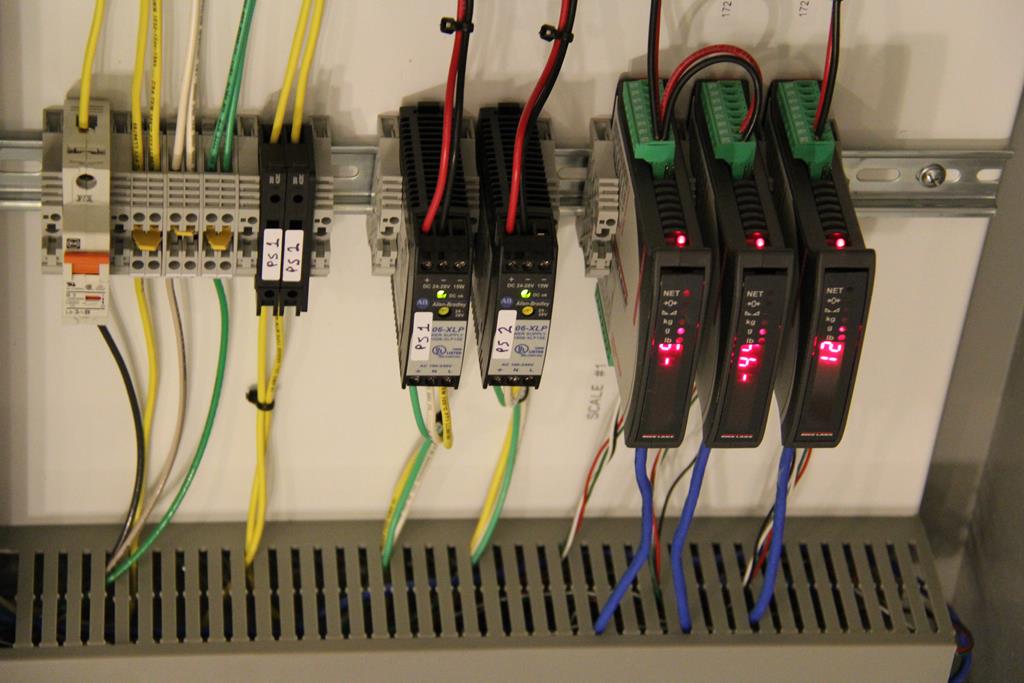
Furthermore, operators were confined to an area near the weight display. “Someone always had to keep an eye on the readout,” Claude continues. “We spent a lot of time adjusting the weight and had to use two people on the job because of the inefficiencies.” Pasta Montana manufactures pasta 24 hours per day / 7 days per week, and at least one of those days was devoted to this bulk filling process. Claude had experience with automated process control at different facilities and called Logic Control Systems, a high-tech systems integrator, to incorporate a similar solution and help optimize efficiency at Pasta Montana.

Claude Smith, Pasta Montana Plant Manager
Making dry pasta is a continuous process. The raw material, semolina, is mixed and extruded through a set of dies to determine shape based on customer needs. After its shape is formed, the pasta mix enters a dryer for approximately four hours. It then runs through a cooler to avoid condensation. Once out of the cooler, the pasta travels through a few elevators and on to the next line, where a tote, bag or box is filled and packaged. This process runs on a loop, around the clock. “We needed the tote filling process to be continuous,” Claude explains.“If there’s a shutdown, it affects everything. Pasta dryers require a lot of humidity to dry the pasta. It seems counter-intuitive, but the humidity comes from the product. So if you’re not continuously putting fresh product in the dryer and taking dry product out, the process stops. It’s difficult to maintain good quality product because you’re eating away your humidity and not replenishing it in the form of product that’s been freshly extruded. If a line stops, we have product ready to exit the dryer and product ready to enter the dryer and each is now suspect in quality. In the past, this happened when we had issues filling totes, the operator fell behind, or a button wasn’t pressed at the right time.”