At first glance, a hippopotamus doesn't look very menacing. Their Shrek-like ears accentuate a hairless face and their chubby body is reminiscent of a harmless manatee. The hippo’s broad snout looks to be the perfect landing spot for a hand to pet, and their interesting skin texture begs for a curious onlooker’s touch. However, this is one of the most aggressive and dangerous animals in the world, responsible for an estimated 200 human deaths per year. Indigenous to Africa, the only place most of us can safely observe a hippopotamus is in a zoo, but most zoos do not have the aquatic habitat necessary to support the water-loving creature. When the Los Angeles Zoo wanted a hippo, to accommodate its size, they modified an existing exhibit, but they also needed to add something new: a heavy-duty scale to weigh the massive hippo.
Weight is essential to diagnose an animal’s health. Since they cannot communicate when something is wrong, their weight often tells the story a sick animal cannot. “Weight can be used to assess body condition and discover or monitor pregnancy,” explains Robin Noll, Senior Animal Keeper at the L.A. Zoo. “Maintaining weight is one of the indications of a healthy animal, so if weight is consistently gained or lost, it can be cause for concern. There may be a disease process occurring or a need to change diet. Conversely, if an animal is obese, a scale is necessary to calculate weight loss and verify that diet adjustments are working.”
The zoo made the necessary habitat alterations for their new hippo, but they didn’t have a heavy-duty scale needed to withstand its future full-grown weight. Additionally, they wanted to weigh their aging Indian rhinoceros, which would also require an equally beefy scale. The installation would not be typical, as hippo temperament requires discrete weight-taking so the animal will not detect something out of the ordinary and become uncooperative.
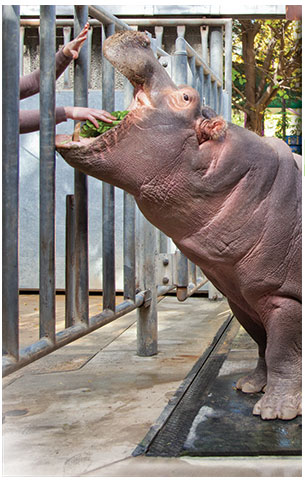
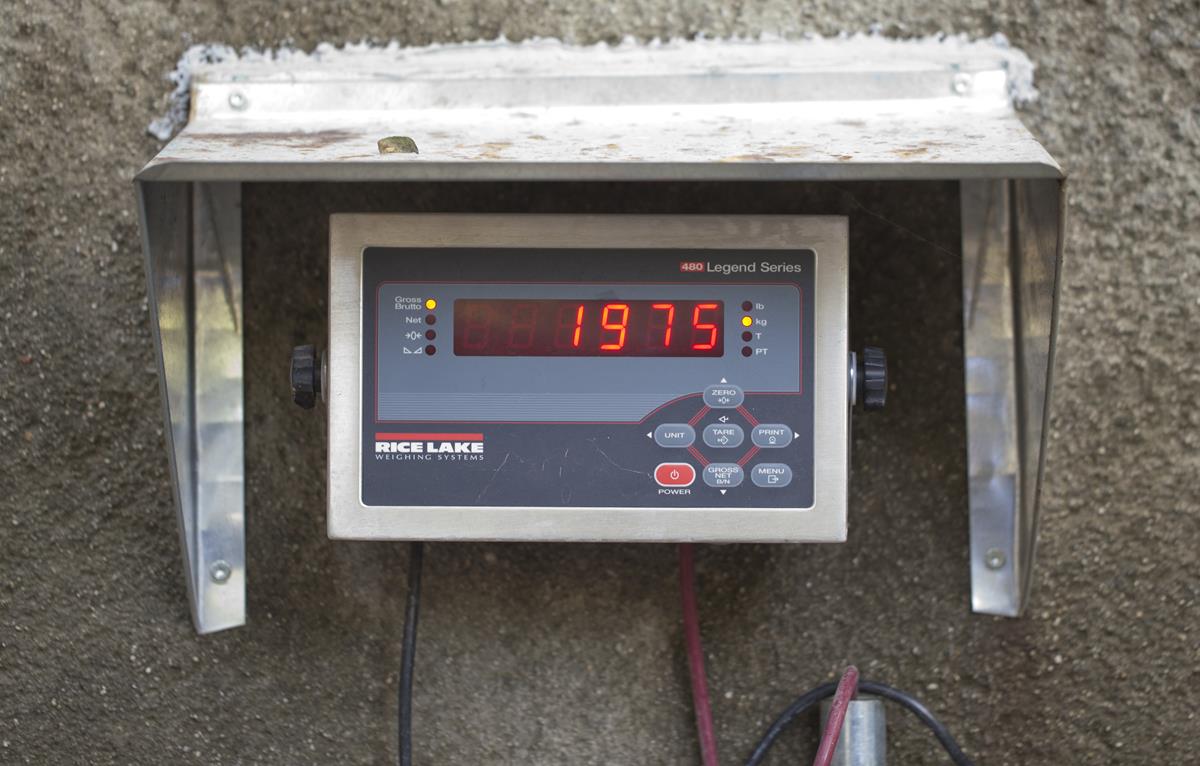
The RoughDeck and 480 Legend Series scale indicator weigh the L.A. Zoo's most dangerous animals.