Find the Best Place for Your Scale While in Use
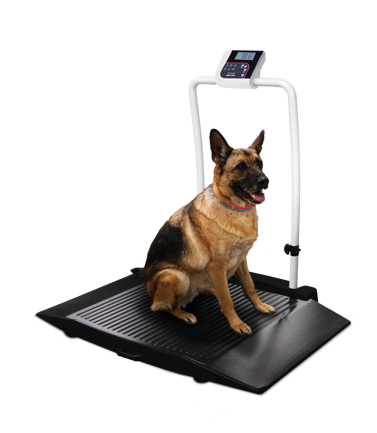
Your scale must be on a flat, hard surface with no padding or carpeted floors. Weight readings may be inaccurate if the scale isn’t placed on a level surface. It is also essential that all ramps are accessible to patients (they must not face the wall) and that the scale fits your space correctly. If you want to place a scale in a particular location, the number of ramps on the scale can affect the placement.
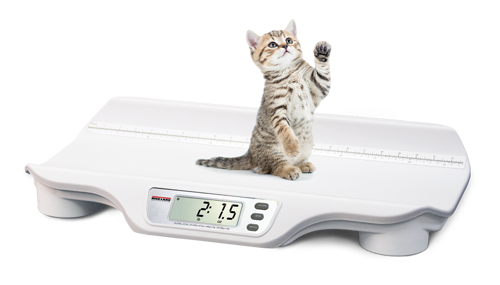
Some veterinary scales are portable, which allows the operator to move them easily and clean under or around the scale when needed. You may also move a portable veterinary scale to different rooms to better assist multiple animals, or determine weight prior to surgeries.
Store Your Scale in a Safe Place
When your scale is not in use, store it in a clean, dry place and avoid areas with high humidity and potential for water on the scale. Humidity and water can negatively affect your scale.
Perform Basic Scale Maintenance
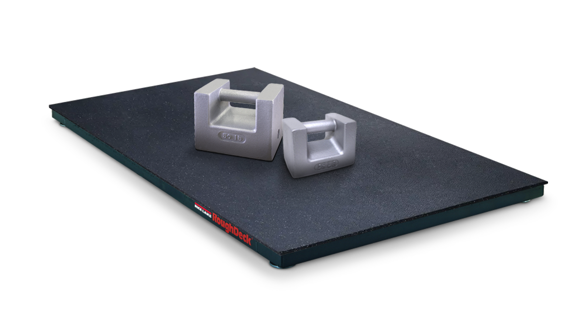
Similar to any other piece of equipment, you must perform a few basic maintenance tasks to ensure the scale stays accurate. You should check the overall appearance of the scale to ensure there are no apparent signs of damage (dents, cracks, scratches, etc.) and inspect the wall power supply (AC adapter) to ensure it is intact and safe to use. Only use the power supply supplied or recommended by Rice Lake. Lastly, some scales will indicate a low battery life on their display; change the batteries as soon as you notice the low-level indicator to avoid disruptions in your day-to-day tasks. Weights should not be dropped onto the scale; this is called a shock load and can harm the scale. Always gently place the weights in the center of the scale when checking for accuracy.