John Russo Sr., founder of Progressive Scale & Software Solutions, Bethel, Conn., has been a scaleman for 37 years. He and his son, John Russo Jr., recognized the capabilities of Rice Lake’s 920i indicator early on. In fact, they now have a staff of programmers and offer programming services to other scale dealers at www.scaleprogrammers.com.
Progressive Scale has developed the “Provision Processing System” using the 920i and a full-service barcode order entry, fulfillment and shipping system that interfaces with an invoicing program and integrated scale system for meat and poultry processing plants.
“Customers love the system,” John Sr. says. “With the 920i in control, it can do anything from data collection, barcode label printing, to full batch controlling and recipe mixing.”
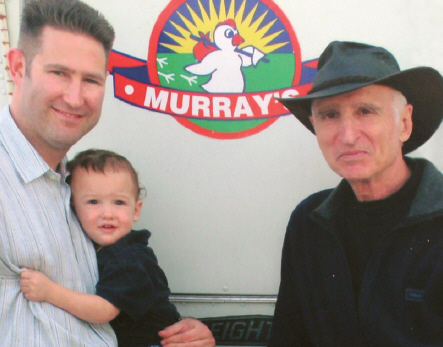
John Sr. is taking us to see the Provision Processing System in action at Murray’s Chicken. We drive west through the Catskills to the rural mountain village of Fallsburg, N.Y., where Murray’s poultry processing plant processes 50,000 organic, humanely handled chickens a day. “Murray’s system started out basic and grew,” John Sr. says. “Murray’s order entry system was first developed about eight years ago as a small stand-alone system. The system they have now is the third generation. Today, it is three separate scale systems; sorting, pre-pricing and production, all hooked to the 920i. They have seven PC stations controlling order entry and billing, two PC stations in process shipping, and eight 920i stations, with wired Ethernet, which are weighing and labeling. Another 920i controls the pre-pricing labeling system.”
At Murray’s Chicken processing plant we meet Dean Koplik, vice president of operations, and Brian Kessler, director of information technology. Brian issues us sanitary jackets and hair coverings and takes us on the grand tour.
“Our biggest challenge in this facility is water. Everything has to be watertight and foolproof,” Brian says. “When I started working for Murray’s in 2000, the company had two PCs peer-to-peer networked for order entry and shipping, six scales and a Rice Lake IQ plus® 710. After Progressive Scale trained me on programming, troubleshooting and repairing the scales, we began upgrading.
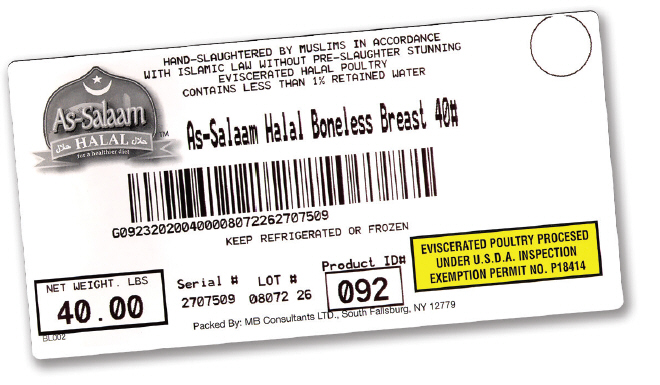
“In 2003 we had to meet the newest USDA traceability regulations. Progressive Scale showed us how the 920i could meet and exceed USDA regulations. At first, it was six 920i s, with stand-alone scales with internal databases,” Brian recalls. “On a weekly basis, I would take a laptop and hook it up to the scale and download all the information; scale ID, product ID, weight that was printed, actual weight (for catch items), lot number and serial number that was assigned to that case.” (Catch weights are when a case needs to have a fixed weight. The weight on the case gets rounded down to that number as long as the actual weight is more than the catch weight.)
“We knew we needed to concentrate on our waste and loss,” Brian explains. “For example, we were selling a 40-pound box catch weight item to a customer, but they were actually getting 42 pounds. We found that the scale operators were giving away two pounds or more with each case. John and I improved the scale software so they had a tolerance of a quarter pound over, and never under, a quarter pound. (USDA regulations do not allow for underweight, only overweight.) This change decreased our loss and gave us a dramatic revenue increase.