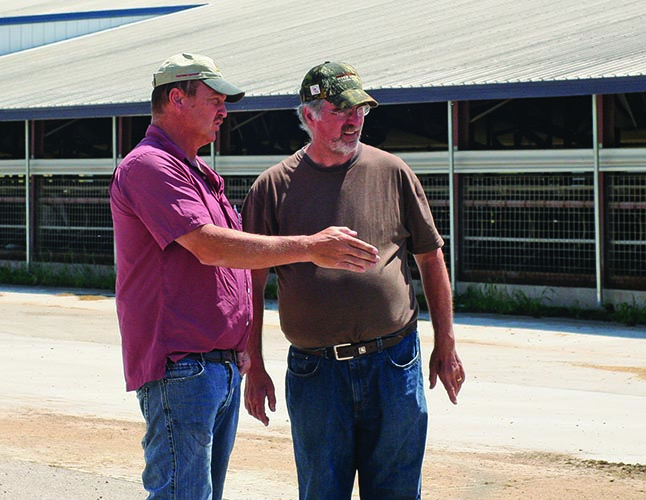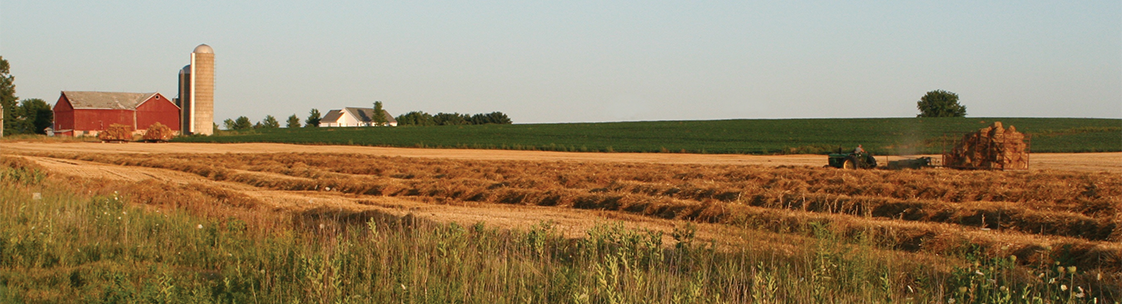
Wiese Brothers Farms, owned and operated by Mark and Dave Wiese (pronounced Weezy) of Greenleaf, is a vast and expansive operation on the Outagamie County skyline. Mark Wiese is less family farmer and more modern business man, minus the three piece suit.
“We farm about 5,200 acres of land, milk just short of 5,100 cows, and have another 4,500 heifers on site,” Mark explains. “Two different parlors, two different facilities, all of our feed storage is here, at the main farm. We built our own feed mill to blend all our own proteins, we own a trucking company and haul our own milk, and I’ve got 35 semis that go over the road to bring feed ingredients that we harvest right back here.”
Mark’s cell phone begins to ring. He answers, has a brief exchange, and hangs up. “We’re fairly vertically integrated, we buy directly from the farmer for our corn and our forages, we have a grain drying facility and we’re a licensed grain warehouse. This feed mill,” as he points upward to a silver, shimmering structure, “my brother Dave and I literally bolted it together ourselves.”
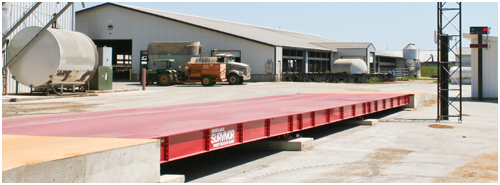
Feeding the cows is a major part of the Wiese operation. During the growing season they buy chopped alfalfa and corn from farmers eight miles in every direction, and use their two forage harvesters and a fleet of semi-trucks to bring it all back to their main farm. It’s here where the feed is stored and mixed, and also where you’ll find a recently installed 70-foot by 12-foot SURVIVOR® OTR truck scale. This beauty has all the bells and whistles, yellow dyed-concrete approaches, a LaserLight® Stop/Go Remote Display, RFID reader, a climate controlled scale house with a 920i® weight indicator, and a long-range antennae with wireless transmitter.
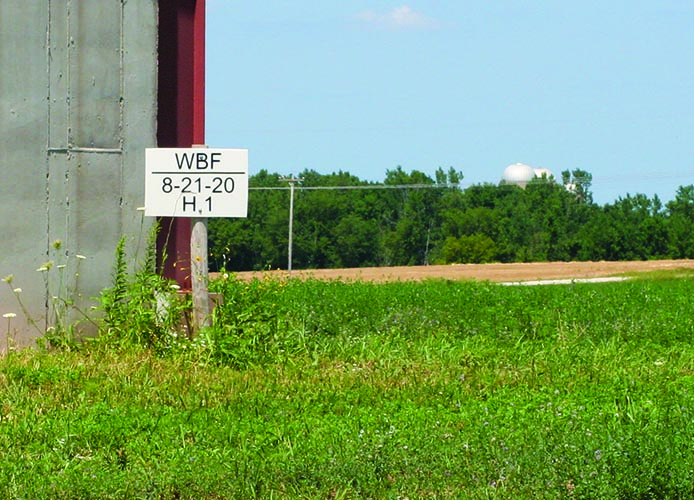
Each field that the Wiese Brothers harvest is marked with a small sign that reads “WBF” (short for Wiese Brothers Farms), followed by numbers representing the section, town and range, and a nickname like “LF” for Larson Farm. If a co-op is sent to spread fertilizer on a field, they’re given the section, town and range along with field nickname, and if it doesn’t match, they won’t go into that field. Those field markers are helpful during harvest time too, when Mark pays each producer individually for their crops.