


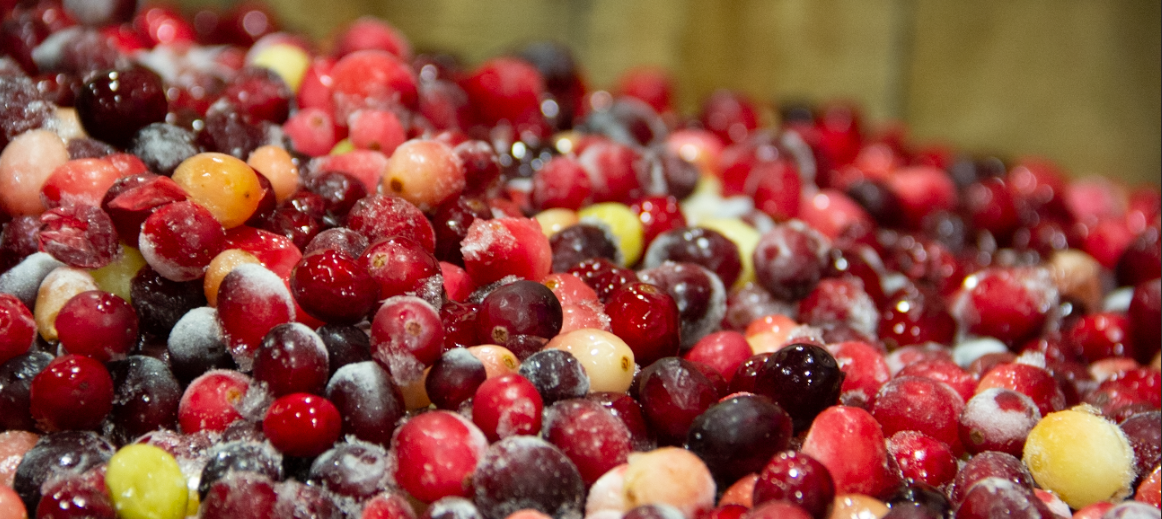
There is nothing like the early morning air on a Wisconsin fall day. The air is crisp and cool—perfect for the cranberry harvest. As the United States’ leading producer of cranberries, Wisconsin harvests more than 60 percent of the country’s crop with Massachusetts, New Jersey, Washington and Oregon producing the remaining 40 percent. Pittsville, Wisconsin may look like your typical rural town, but it’s home to Badger State Fruit Processing where cranberries are plentiful and Rice Lake’s Master 421 belt scale with 920i indicator keep operations running like clockwork.
Don’t let the tranquil outdoor setting fool you; there isn’t much peace and quiet inside Badger State Fruit Processing during the pandemonium of harvest. Dryer fans are blowing and the belt scale is humming seemingly nonstop. The facility has been working with cranberries for more than 30 years, and they have the operation down to a fine science, utilizing Rice Lake’s equipment to weigh berries in motion at a speed of over 200 pounds per minute.
Processing over 50 million pounds of cranberries into concentrate, as well as sweet and dried cranberries on a yearly basis, Badger State Fruit Processing is the largest independent supplier of cranberry products in the United States. Their position in the center of Wisconsin’s cranberry country makes for an ideal location.
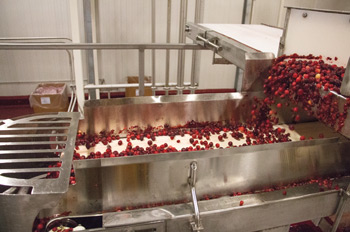
The 421 Master belt scale is specifically designed for high-volume, low-density applications like fruit processing.
Contrary to popular belief, cranberries do not grow in water. A perennial plant, cranberries grow on low-running vines in sandy bogs and marshes. Cranberry marshes are flooded with water to aid in harvesting each fall. When the marsh is filled with water, berries float to the surface on a small pocket of air. They can then be harvested off the top of the water by specialized equipment.
Cranberries are harvested each year from late September through October, then trucked to the Badger State Fruit Processing facility, where they are frozen and stored for up to a year before process-ing. During harvest season, approximately 200 trucks per week come in and out of the facility delivering cranberries. Processing this large amount of product makes reliable, streamlined systems essential.
