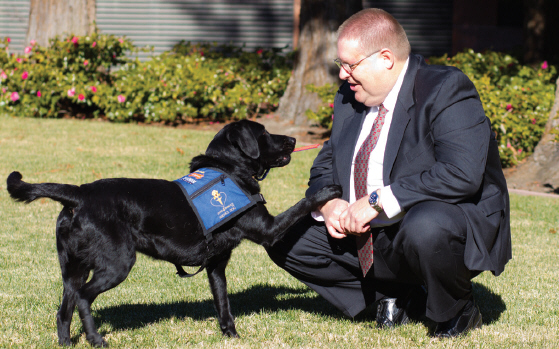
Unbeknownst to Mark, he was slipping into a severe low blood sugar episode. Most likely, his low blood sugar caused a seizure in his sleep, and a puppy Mark was training to be a service dog for Guide Dogs for the Blind probably recognized Mark was in distress and woke him from his hypoglycemic haze.
Mark recovered from this terrifying event, but it also sparked an idea to merge two aspects of his life into one experiment. As a forensic metrologist, Mark was working on breathalyzer technology. Mark also dedicated a large amount of time training service dogs. His experience in New York brought the two pieces of his life together: Mark began exploring a dog’s ability to decipher human breath, in particular, the chemicals associated with hypoglycemia.
Using dogs in Mark’s experiments with hypoglycemia was a natural fit. 40 percent of service dogs from Guide Dogs for the Blind are employed to assist those with visual impairment from diabetes. Mark began his volunteer work training guide dogs in 1996 because of the probability he would need a guide dog in the future due to diabetic blindness. Mark wanted a way to give back to the organization he believed would provide him with life-changing services as his diabetes progressed.
Mark’s episode in that New York hotel room, his work with Guide Dogs for the Blind, and his experience in forensics metrology culminated into his hypothesis that he could train a dog to detect hypoglycemia from his breath and sweat. But most importantly, Mark wanted to determine if a dog could detect hypoglycemia (low blood sugar) in his breath, as well as train the dog to detect hypoglycemia in another person’s breath and sweat. Could training a diabetic alert dog be repeatable?
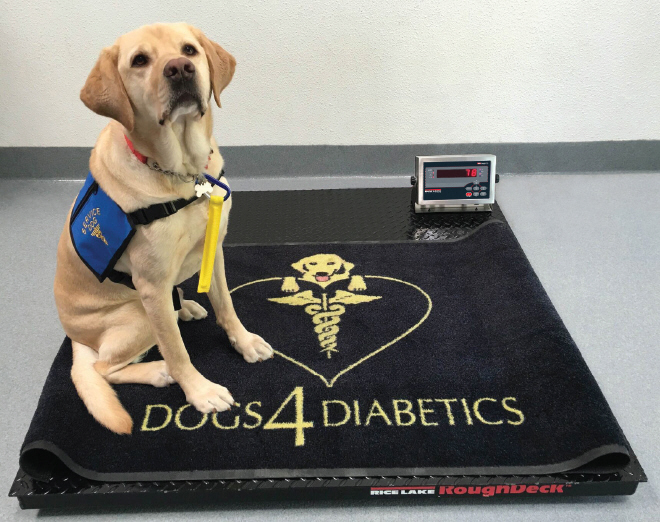
Because of Mark’s familiarity with training Guide Dogs for the Blind, it was a natural fit that his hypoglycemia alert dog pilot, a yellow labrador retriever named Armstrong, would be donated from the organization. Dogs that enter the Guide Dogs for the Blind training program go through an extensive process. The dogs need to develop very particular skills, exhibit innate desirable characteristics, and pass a long period of exposure training from a very young age. In addition to their training, guide dogs need to be kept in peak physical condition. Monitoring the dogs’ health, including their weight, is vital to a long and healthy life of service for those in need.