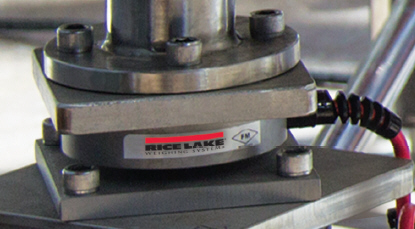
CHIPPEWA RIVER DISTILLERY AND BREWSTER BROS. BREWING COMPANY KEEPS THE LOCAL SPIRIT ALIVE WITH UNIQUE CRAFT BEERS, QUALITY SPIRITS AND RICE LAKE’S WEIGH MODULES AND WEIGHT INDICATORS.
We all know it when it hits our lips—the refreshing taste of a good brew. That experience is even more enjoyable in the company of friends and family. The traditional taproom was originally established to provide rest and refreshment to travelers during the Roman colonization of Britain. But centuries later, as many of us have already experienced, the spirit of a taproom can be anywhere a tasty brew is found: around the campfire, at a football game or, in the case of Kurt Schneider and Jim Stirn, in their own garages.
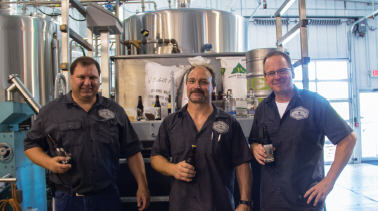
25 years ago, Kurt Schneider and Jim Stirn were friends and budding engineers at a supercomputing technology company. As time went on, so did their career paths. Kurt began a few business start-ups and Jim pursued his Master of Business Administration (MBA). Over the years and through multiple career and life changes, Jim and Kurt kept in touch. As conversations typically evolved over bubbling brews, Jim and Kurt tried to figure out how to combine their passion for craft beer and quality spirits with their engineering backgrounds. Soon after, they partnered with Dave Behling, an electrical engineer, to turn the dream into a reality. Chippewa River Distillery and Brewster Bros. Brewing Company opened Easter weekend of 2016, and has continued to experience success in Wisconsin’s Chippewa Valley area as a premier brewery and distillery.
A good brew starts with grains and at this rare combination of brewery and distillery, all of the wheat and corn come from a local farm in Chippewa Falls. In fact, the company is committed to buying locally as much as they can—even their tables are produced by a local Amish community. The grain is first run through a mill, a crucial first step that could make or break both brews and spirits. There is a fine line between cracking the grains so as to keep the hulls intact and crushing the grains to where they become damaged. The grains are milled and transferred to a mash vessel and hot water is added.
Combining the grain and hot water is commonly referred to as “mashing,” which is a process that hydrates the grain, activates the malt enzymes and converts grain starches to fermentable sugars. The mashing temperature determines whether sugars are fermentable or unfermentable, which ultimately determines if the beer is dry or sweet. Enzymatic activity ends when the temperature is raised to 170 degrees Fahrenheit.
The next step is called lautering. The lauter tun separates the colored, flavored sugary liquid formed in the mash (also called wort) from the spent grain. Once the sweet wort is separated from the grain, it is boiled one to two hours. This boiling process is when America’s trendiest beer ingredient, hops, are added. There are hundreds of varieties of hops, with the most common flavors being citrus, pine, fruit, earth and spice. Deciding when to add hops to the boil can largely affect the flavor of the beer. Hops added earlier to the process produce a more bitter flavor and hops added later to the process are intended to enhance flavor and aroma, but do not bitter the beer. Hops are meant to balance out the sweetness of the wort and each craft brewer uses hops to define who they are, and what kind of experience they want their patrons to have. Brewster Bros. Brewing Company currently has five year-round and three seasonal beers. Varieties range from a cream ale to a porter and a lager to an IPA.
Once the wort has cooled, it is moved to a large, stainless steel vat called a fermenter where yeast is added. Fermentation eats the sugars and expels carbon dioxide and alcohol. Depending on the variety of yeast used, as well as the temperature during the fermentation process, certain flavors of beer can be achieved in this process as well. When fermentation is complete, the tank is cooled to refrigeration temperature, forcing the yeast to form into clumps and settle. The brewer can then remove the yeast, creating the final product: a delicious brew!