


The Barron County Incinerator
In the heart of Wisconsin, amidst rolling farmlands and picturesque small towns, lies an unlikely power source: the Barron County Waste-to-Energy facility. This modern, meticulously regulated facility incinerates up to 100 tons of material per day, generating clean energy and reducing landfill contributions.
The facility, known as the “Barron County incinerator,” is a testament to the evolving landscape of waste management. An example of innovation, ecological awareness and community partnership, the incinerator is one of only a few in the United States that can burn practically any non-hazardous item—even super-insulated coolers, appliances and high-density materials.
Truck Scales for Corrosive Environments
To operate efficiently, track incoming waste and calculate fees, an accurate truck scale was needed. “We had been using a competitor’s truck scale for a few years,” Brent Bohn, Barron County Waste-to-Energy Plant Director, explains. “It became more trouble than it was worth. It really wasn’t built to withstand the high volume of trucks over time and corrosive materials crossing the scale.”
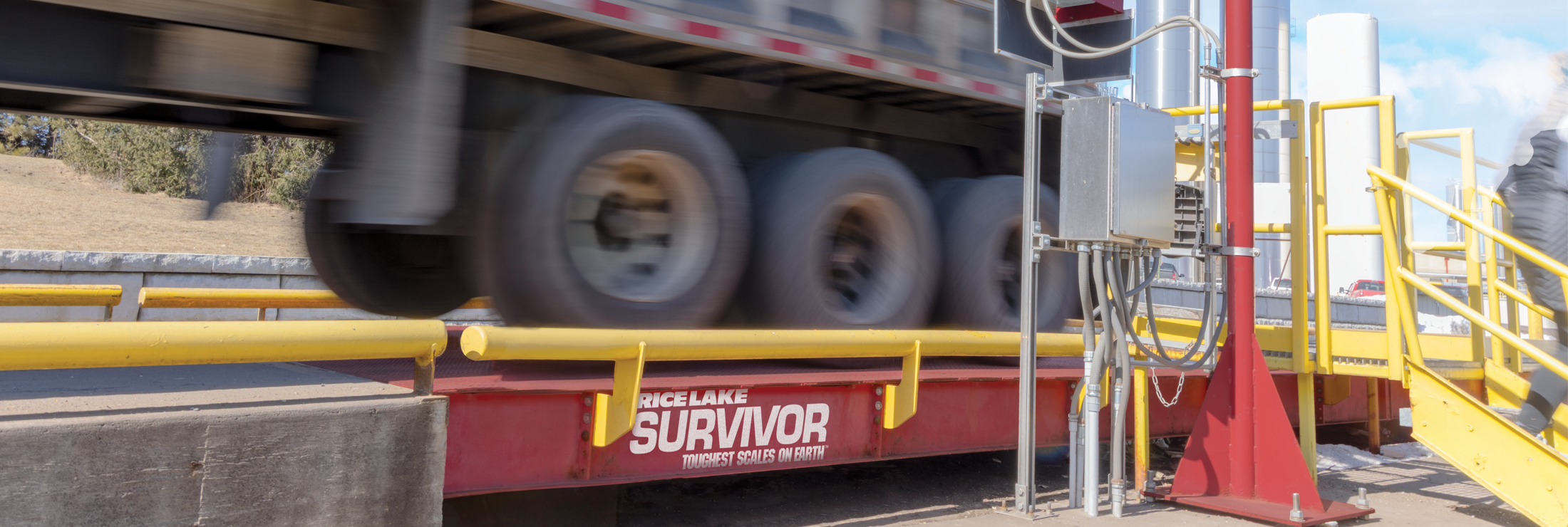
Because the incinerator is located in the nearby town of Almena, Wisconsin, USA, a mere 25 miles from Rice Lake Weighing Systems, Bohn was already familiar with Rice Lake’s reputation for manufacturing high-quality truck scales that thrive in challenging environments. “We contacted UniFide CST Scale Systems in Chippewa Falls, Wisconsin, and they installed the SURVIVOR OTR truck scale.
We also needed a scoreboard for drivers to see their weight while on the scale,” Bohn adds. The LaserLight3 remote display was the perfect solution to provide a real-time weight display. “Both have been great,” Bohn concludes. “The SURVIVOR truck scale has been quite an upgrade, and it’s nice to have a scale we can count on. We have a constant stream of trucks and can’t afford to have any downtime.”

Reducing Carbon Footprints with Incinerators
The story of the Barron County incinerator begins in the 1980s, when landfills were the norm but concerns about environmental impacts, such as groundwater contamination, were growing. Barron County, like many communities, faced the challenge of sustainably managing its waste stream. The traditional approach of burying trash in landfills needed to be reimagined.
County leaders recognized the need for a more innovative approach. They sought a solution that would not only address the immediate waste disposal needs but also provide long-term environmental and economic benefits. After careful consideration, the waste-to-energy facility opened in 1986.
Over the years, the incinerator has become an invaluable resource—both locally and nationwide. Businesses of all types, including massive online retailers, industrial and consumer-goods manufacturers, construction companies and other environmentally conscious customers regularly utilize the incinerator.
“Many of these companies have goals to reduce their carbon footprint,” Bohn explains. “Rather than having their trash sit in a landfill for decades, we turn it into something useful in the form of electricity. The only byproduct we cannot use is ash, which amounts to a small fraction compared to the original materials.
The Waste-to-energy Process
The process at the Barron County incinerator is a blend of engineering and environmental science. It begins with the arrival of trucks weighed on the SURVIVOR OTR truck scale. This weight is recorded and the trucks dump their materials within the facility, then are weighed again as they exit. The difference in weight is calculated and used to charge the customer.
Trash is then fed into a massive two-stage furnace, where it is burned at extremely high temperatures. The primary furnace reaches 1,300° Fahrenheit while the secondary furnace often exceeds 1,800° F. This intense heat not only reduces the volume of waste by approximately 90% but also generates steam, which is used to power a turbine and generate electricity.
Approximately half of this electricity is sold to a neighboring cheese factory, which utilizes it to power their daily operations as one of the largest blue cheese processors in the world. The remaining energy is used to sustain the incinerator plant itself, and the rest is sold back to the grid to power thousands of homes and businesses.

