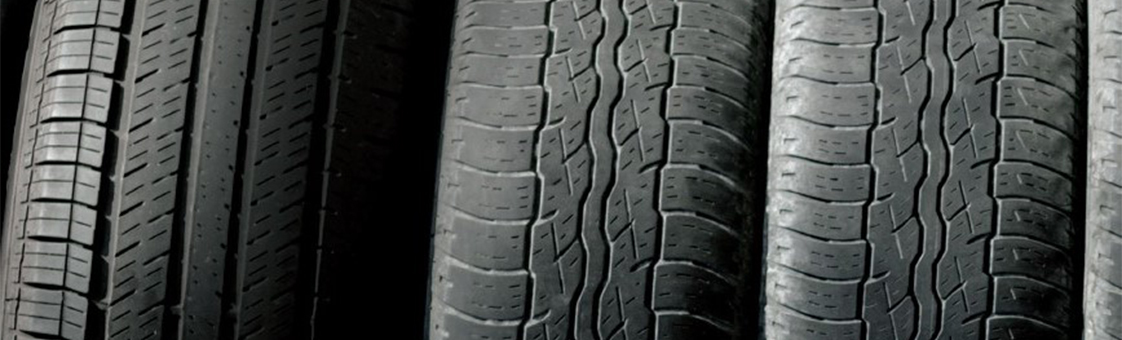
A tire comes into this world for just one purpose. It carries us from point “A” to point “B” and back again thousands of times, occasionally leaving a mark or two on the pavement of our lives. And suddenly it’s over, sometimes with a bang, and other times just slowly and gradually, never to be heard from again. But after that tire’s life ends, then what? The world only needs so many tire swings, garden sculptures, and DIY craft projects. Where does all that tread go? Many of these rubber souls enjoy an afterlife well beyond their 50,000 mile warranty, thanks in large part to products like Rice Lake’s 920i digital weight indicator, and the resourcefulness of companies like Ecore International, in Lancaster, Pennsylvania.
Ecore is one of only a handful of players in the recycled-rubber game, but the first to bring recycled-rubber flooring out of the fitness center and apply it toward more common, everyday surfaces. Director of Operations, John McFalls, makes the case for rubber’s versatility. “It has a lot of qualities: safety, sound absorption, resilience, and it lasts a very long time.” From artificial turf and playground surfaces, flooring tiles, carpeting underlayment, basketball and tennis courts, to pavers, industrial gaskets and more, there’s almost no limit to what a tire can become. Ecore products like these can be found around the globe, and have even made their way out of this world, aboard NASA’s space shuttle.
More than 150 years ago, long before the automobile was even a glimmer on the horizon, Ecore got its start in cork. “This is the oldest process we have,” John says, gesturing to a stack of cork-filled burlap sacks. “These bales come right from the cork farm. What we do is we send them up into a machine that breaks it into fine particles, we take the moisture out and we’re left with granules.” In granular form, this cork can be mixed with a blend of adhesives and fused together for a wide range of purposes, much the same way rubber can.
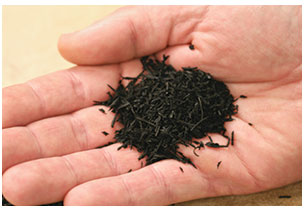
To see where Ecore’s rubber products get their start, you’d have to make tracks to the company’s processing plant in York, Pennsylvania. That’s where dirty, worn-out tires turn into something with a lot more potential. John continues, “Basically we chop them up, process the material into finer and finer particles, we screen it, clean it, get the stones out, get the fibers out, and it’s all shipped here, to Lancaster.” These rubber granules, or “rubber crumb,” when mixed with things like pigments and polymers and bonded together with heat, will take on almost any size and shape.
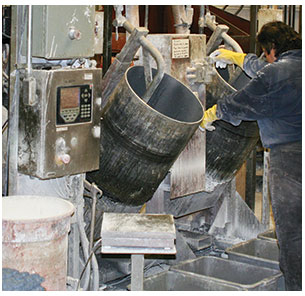
It takes a lot of special recipes to get everything pulled back together just right, and that processing and measuring of ingredients takes a lot of scales. At Ecore, you’ll find them everywhere. To keep things running smoothly, Ecore partners with Lancaster-based Garber Metrology to handle all of its calibration, from the hand tools to the scales in the manufacturing process. And when it came time to source equipment that would help automate their tile-making process, Garber recommended their scale brand of choice: Rice Lake.