


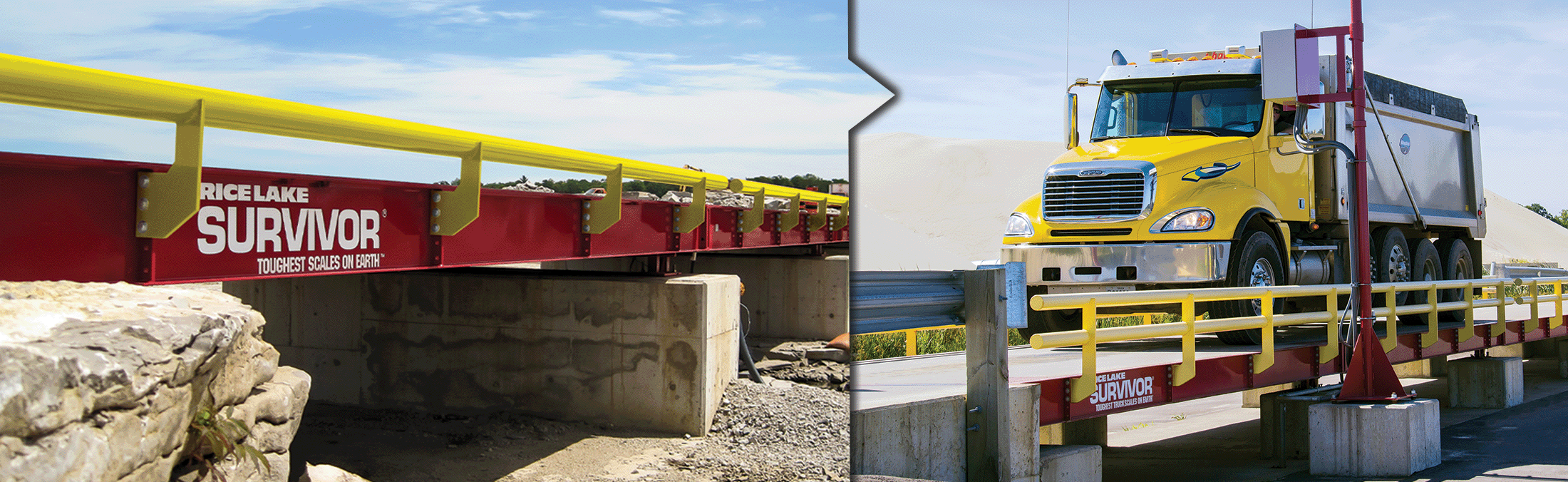
Picking a Truck Scale Foundation
Even the toughest scales risk damage with a poor foundation. Picking the right base helps maximize the lifespan of your truck scale by providing the proper support.
Prepping the Site Before Installing a Truck Scale
Prior to installing a truck scale, the site condition must be assessed. Many factors, such as the site’s slope and soil conditions, impact installation. Consider environmental aspects impacting the scale, such as heavy rain or snow. Drainage also contributes to the long-term health of a truck scale, so ensure the site has adequate runoff.
Based on the site condition, the foundation must match the certified drawing provided by the truck scale manufacturer so the foundation doesn’t shift. Shifting could cause the scale to fall outside calibration tolerance.
Depending on the type of foundation, concrete curing time can vary. Discuss with the supplier ensure the foundation has time to cure before the scale is installed. Suppliers can typically recommend quality, local contractors.
Choosing a Truck Scale Foundation
Once the site is assessed, companies must decide on a foundation. Until the early 1970s, truck scales were installed in expensive, deep concrete pits. Now, most scales are installed aboveground or in concrete pits with floor foundations. With the benefit of new modular construction, scales can be installed in shallower pits.
Companies use pit foundations when the site is smaller. A pit installation requires less space than an aboveground installation since longer approaches are generally required for aboveground foundations.
However, for applications with a larger site, aboveground foundations are less vulnerable to corrosion. Pit foundations are more susceptible to rust since standing water can gather in the pits and damage metal overtime.
Pit vs. Aboveground Foundation
Pit |
Aboveground |
|
|---|---|---|
Cost |
More expensive due to additional excavation, reinforcing steel and concrete |
Less expensive due to less construction work |
Service and Scale Repairs |
In some cases, can be more costly due to confined area restrictions, which often require gas detection devices and operator safety harnesses to be used |
Less difficult/less costly and allows service from the deck of the scale |
Clean Out |
Often done manually and can be very time consuming “bucket by bucket” |
Quick and easy—done with a water hose or air compressor from the side |
Scale Inspection |
Must be done from inside the pit |
Can be performed by simply walking around the perimeter of the scale |
Restrictions or Hazards |
Some states require specified clearances underneath the scale. Must also meet with OSHA and confined space hazards regulations |
Some states require specified clearances underneath the scale |
Approaches |
10 feet flat and level |
Often 10 feet flat and level |
Ramps |
Not required |
Typically 25 feet long on each end of the approach. Often requires more real estate to install and operate |
Electricity Needed |
Typically has electricity for pit lights and sump pump if no gravity drain is present |
No pit light or sump pump required |


