


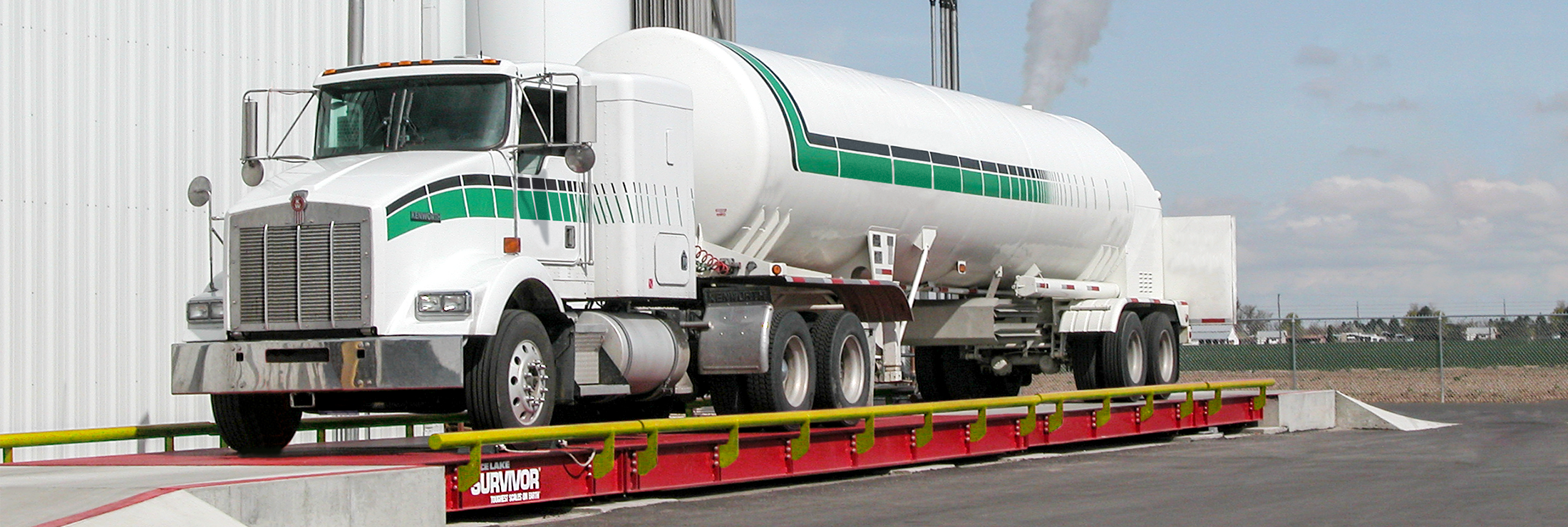
Truck Scale Maintenance Plan
Even the best-designed scales are subject to wear with consistent use. It’s good practice to schedule a thorough checkup on your truck scale every six months. However, that may be too infrequent, depending on the application. Consider the number of weighments, climate and value of the product being weighed. Aside from the actual calibration, most truck scale maintenance will involve you or your scale technician visually inspecting the scale, foundation and surrounding area.
It is best practice to do daily visual inspections to verify proper scale operations and prevent major issues. Verifying the scale deck is free from debris and the indicator reads zero is important for accurate weight readings. When needed, contact a certified scale technician to assess concerns and recommend necessary next steps.

Foundation and Approaches
Cracked foundations can cause the scale to move or settle, leading to chronic calibration errors. This can impact longevity and accuracy. Small cracks can easily lead to larger ones, resulting in costly damage. Calibration errors may result in inaccurate weights or product costs. Plus, the downtime to correct the errors can lead to lost profits.

Calibration
Every vehicle scale should be calibrated with at least 25,000 pounds of certified test weights by a state-licensed servicing agent. This verifies weights are displayed correctly, and that the scale complies with regional regulations.


