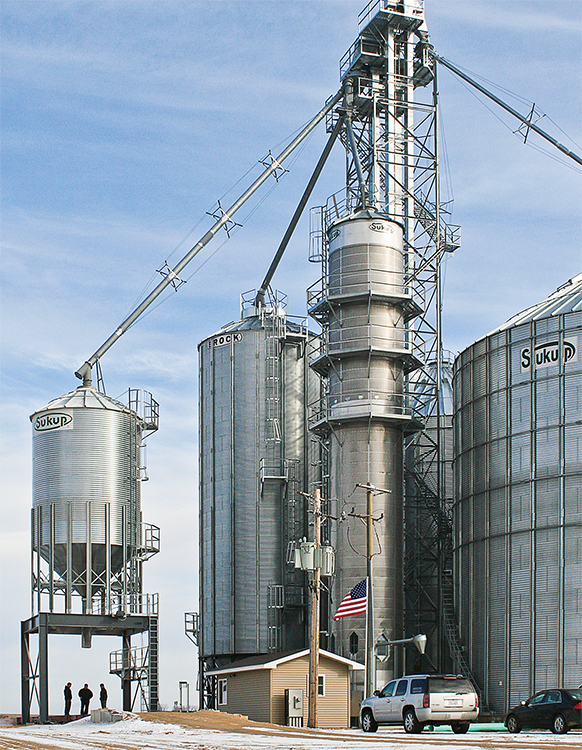
Grain fields in eastern Illinois and Wisconsin stretch as far as the horizon in all directions. Towering clusters of bins and elevators pinpoint the super-sized grain facilities at rail stops and small towns. All is quiet—until harvest when the dust hits the wind.
For years, grain terminal operators have invested in safety equipment and training to protect their personnel and property from combustion caused by flying fibers or “flyings,” more commonly known as dust. Of all types of dust explosions, those associated with grain dust are the most common and the most dangerous. Any time grain is moved, processed, or stored, potentially combustible dust is generated and suspended in the air. In confined spaces like elevators and dryers, ignition sources are always present.
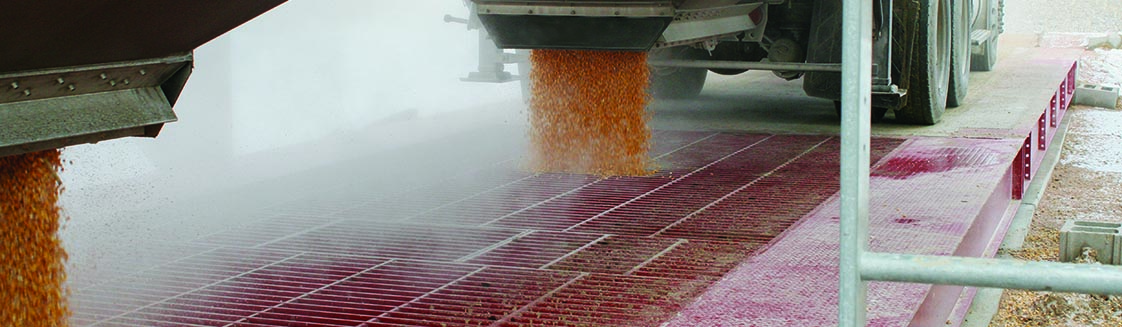
Even outdoors, grain dust creates serious air pollution. When fleets of hopper-bottom semi-trailers are unloading 1,200 bushels of grain every 11 minutes, day and night, clouds of dust can envelop the scale house and equipment and coat drivers’ throats. Dust control is also a concern because the area around grain-handling facilities must meet air-quality standards mandated by state and federal guidelines.
One of the issues encountered when confining dust in grain-handling applications is the effect confinement devices can have on weighing equipment. Many confinement systems directly contact weigh hoppers, truck scales, conveyor scales, and bagging scales. This contact can increase potential errors with weighing-system
accuracy if implemented improperly.
Jay Garnhart, Cream City Scale LLC, wanted to integrate the Lowry Manufacturing Company dust-collection system with Rice Lake SURVIVOR® grain-dump scales. The Lowry system is inserted into the underground pit. There, it pulls the proper volume of air from the pit to capture particles and return them to the grain stream.
Jay says, “I call it a ‘sock.’ It’s a mesh lining that fits above the hopper and below the scale.” The ingenious part is the way the sock is attached to the scale. “There is enough play so the load cells can be quickly accessed, and the sock won’t affect the accuracy of the scale.” Before the idea developed, scale techs attached the two systems in a way that made weighing components like load cells inaccessible—unless separated.
The sock fits like a glove. The interface of the sock to the hopper is airtight, capturing grain dust along the entire stream from hopper to pit. The sock also prevents fugitive dust from building up on bearings, motors, and other peripheral equipment near the grain-handling system. Cleaner, safer, more efficient.