


How Signal Conditioners Work
When weight is placed on the scale, strain gauges inside the load cells bend slightly, creating a change in the analog signal that represents the object’s weight. However, computers and other devices cannot directly read analog data.
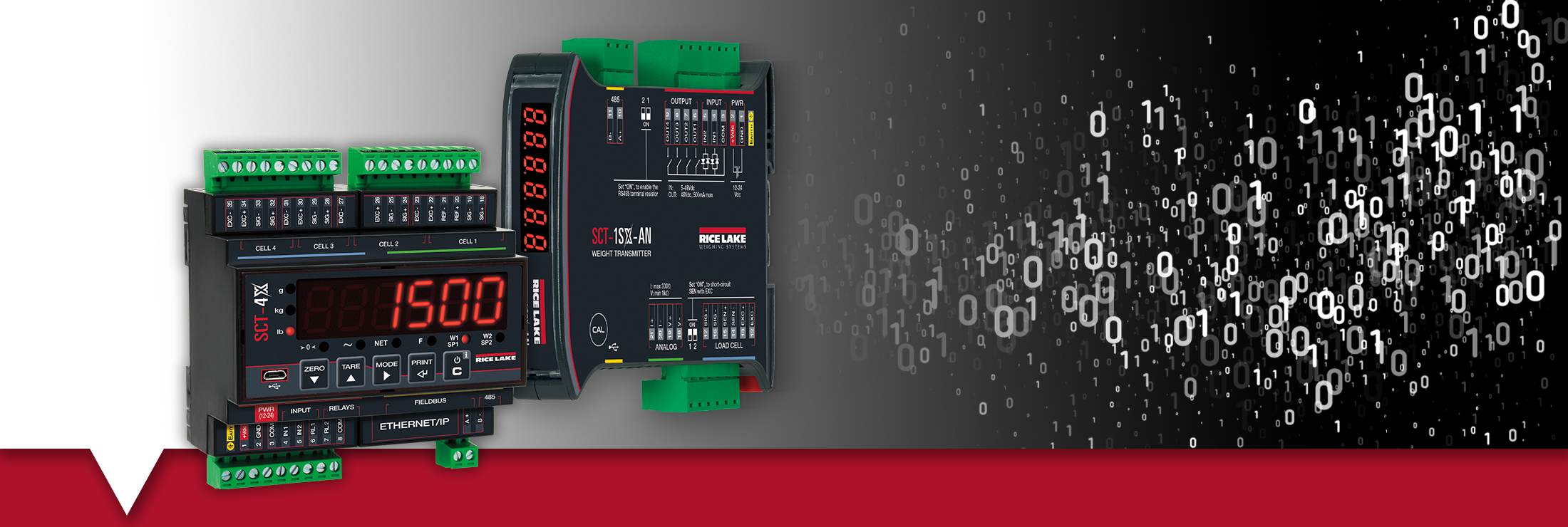
A signal conditioner receives analog data from load cells and converts it into a digital signal compatible with web servers. This process is known as conditioning, and depending on the transmitter and the signals received, different methods can be used.

Linearization
Signals need to have a straight-line, or linear, relationship with the measurement being taken. For example, if a scale has a 100-pound capacity, and a 25-pound weight is applied, the signal should reflect 25% of the load cell’s maximum current. The scale capacity and the weight applied should always be linear.
If the relationship isn’t linear, then the changes in measurement will not be proportional. Signal conditioners use linearization to ensure higher accuracy and a straight-line relationship between devices.
Amplification
Some signals are too small for processing and must be amplified to be read digitally. Signal conditioners will either increase the measurement resolution or the signal-to-noise ratio so the signals are compatible.
Isolation
Industrial environments may experience signals outside of the input from a load cell, such as voltage spikes. These unexpected signals can damage equipment, especially if received at a high frequency. Signal conditioners can isolate the proper signal and prevent other signals from reaching and damaging systems.
Filtering
Facilities may have certain frequencies that shouldn’t be registered. These could come from other devices or activities at a facility. Signal conditioners can be set to reject signals within a range to prevent other signals from passing through. Additional software compatible with signal conditioners can offer further filtering capabilities.
Excitation
Certain devices, such as strain gauges, may need external voltage or current sources for proper operations. Signal conditioners can produce this excitation to ensure devices function accurately and that outputs can be read.