


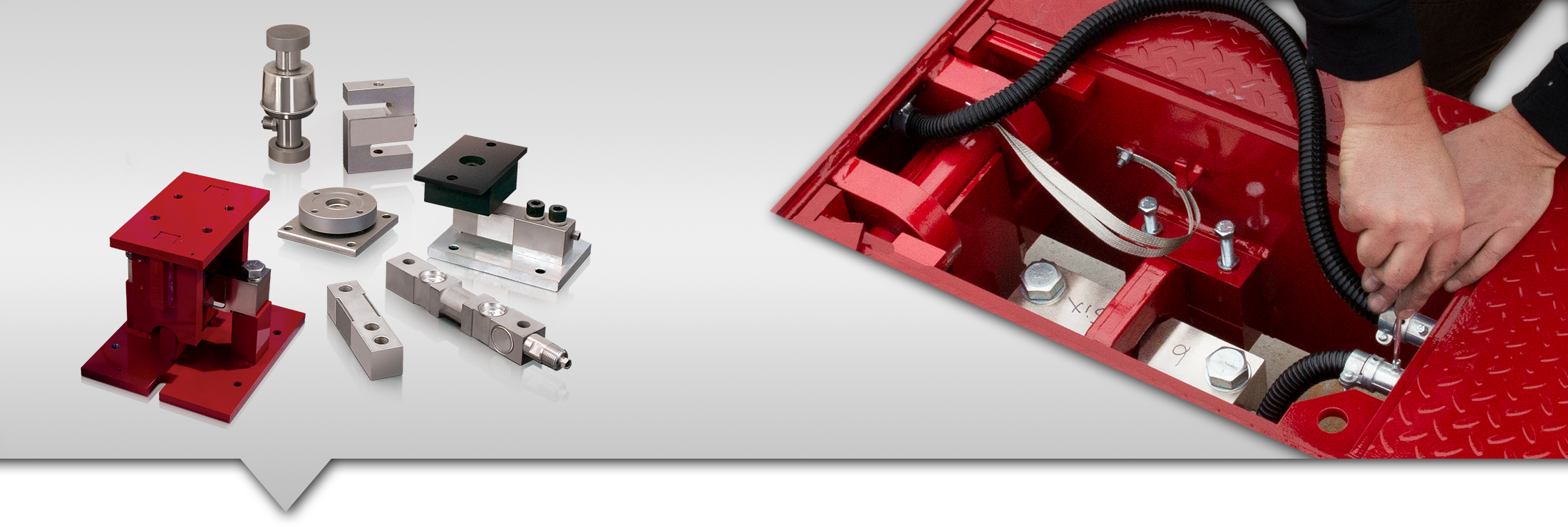
What is a Load Cell?
A load cell converts a mechanical force into an electrical signal. In truck scales, load cells are typically mounted beneath the weighing vessel and compress when weight is applied. The load cell produces an analog output signal based on applied force, and it’s transmitted to a controller that converts the signal into a digital weight measurement. There are three main types of load cells, and they transmit this information in different ways:

Types of Load Cell Designs
With so many different scales and applications, load cells are designed in various ways to suit the needs of specific environments. Depending on the equipment used at the site and the items being weighed, load cell needs may vary. Different load cells come in varying sizes, which may impact what kind of mount is suitable for the scale. For heavy-capacity situations such as weighing trucks, the following are frequently used:

|
Rocker Columns: |
Double-ended Shear Beams: |
Canisters: |
