


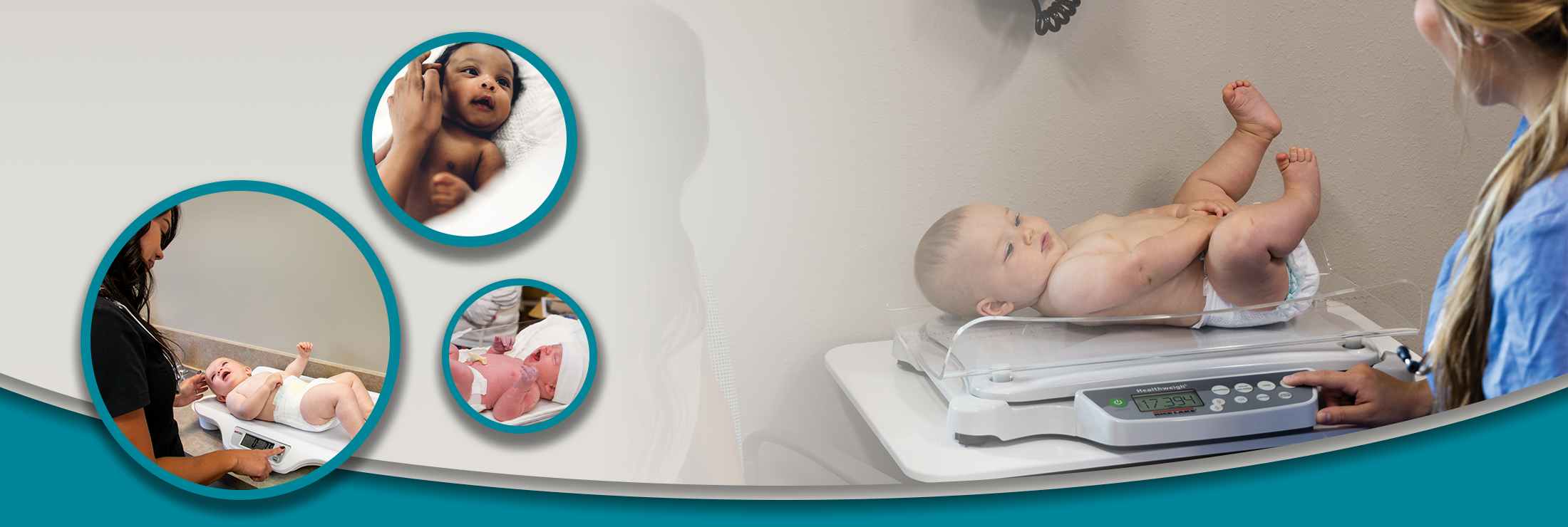
Comprehensive Weighing
Frequent, accurate weight readings are a necessity to ensure pediatric patients are growing as they should.

Growth Progression
Steady weight gain is an indicator that a baby is in good health, and monitoring measurements allows medical professionals to track key growth aspects. By tracking length, weight and other measurements, practitioners can adequately analyze and reference growth charts and patterns throughout many key development stages.
Length and head circumference are frequently measured to observe proper growth rates and trajectories. They are also often indicators of overall health. Practitioners can also identify genetic and individual-specific environmental factors that may affect the baby’s health.
Although measurements don’t always indicate a severe health issue, they can help practitioners detect a potential concern. Weight is checked to ensure pediatric patients aren’t gaining or losing too much weight. For infants, it can be difficult to determine if they’re eating enough, especially if breastfed. Babies born premature, small, large or with health concerns are often more likely to have a detailed care plan. By assessing weight, medical professionals can determine whether a nutrition plan should be considered.
Proper Medication Dosages
Not only does weight indicate growth, but it assists medical professionals in prescribing proper medication dosages. To appropriately do this for children and infants, it is best to use a baby or pediatric scale as they often provide dual ranges and precise readings.
An improper weight reading may lead to issues such as perscription errors, unclear dosing recommendations and more. These are the most common cause of adverse drug events, which are often sourced from improper weight readings or documentation.
Many retail pharmacies do not mandate the inclusion of the child's weight on written prescriptions, making it difficult for pharmacies to determine if a weight-based dosing error has occurred. There is tremendous variation in normal weights for young children, and estimating weight by age rarely renders accurate results. By performing and providing comprehensive weighments, practitioners can provide the most effective dosage recommendations.

