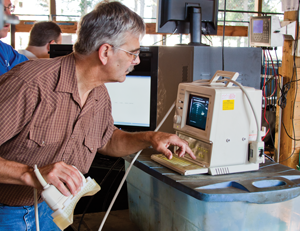
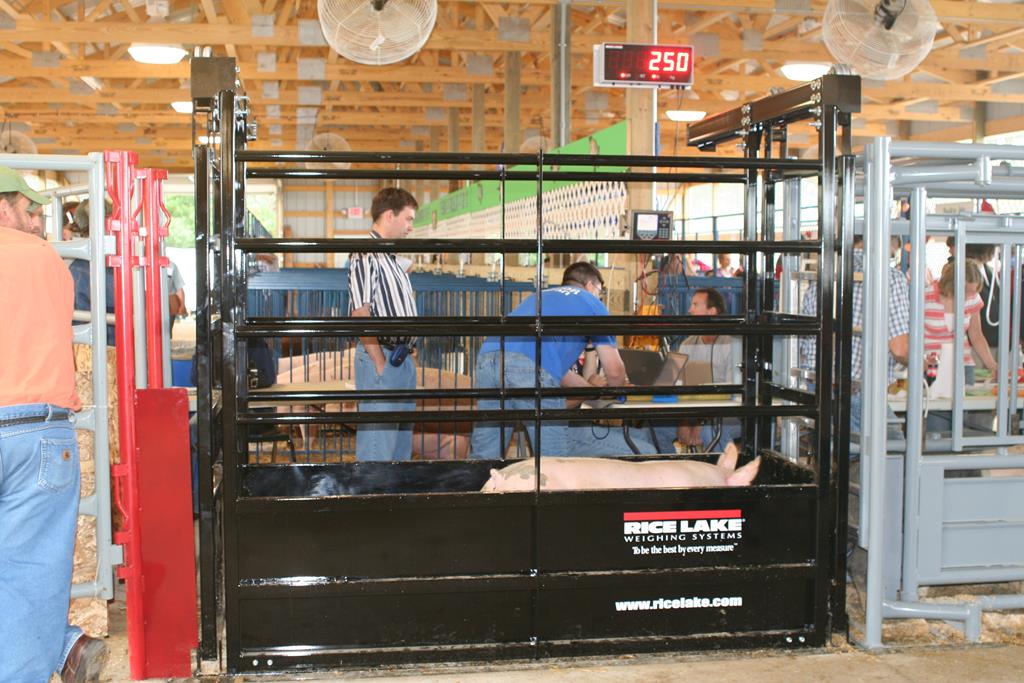
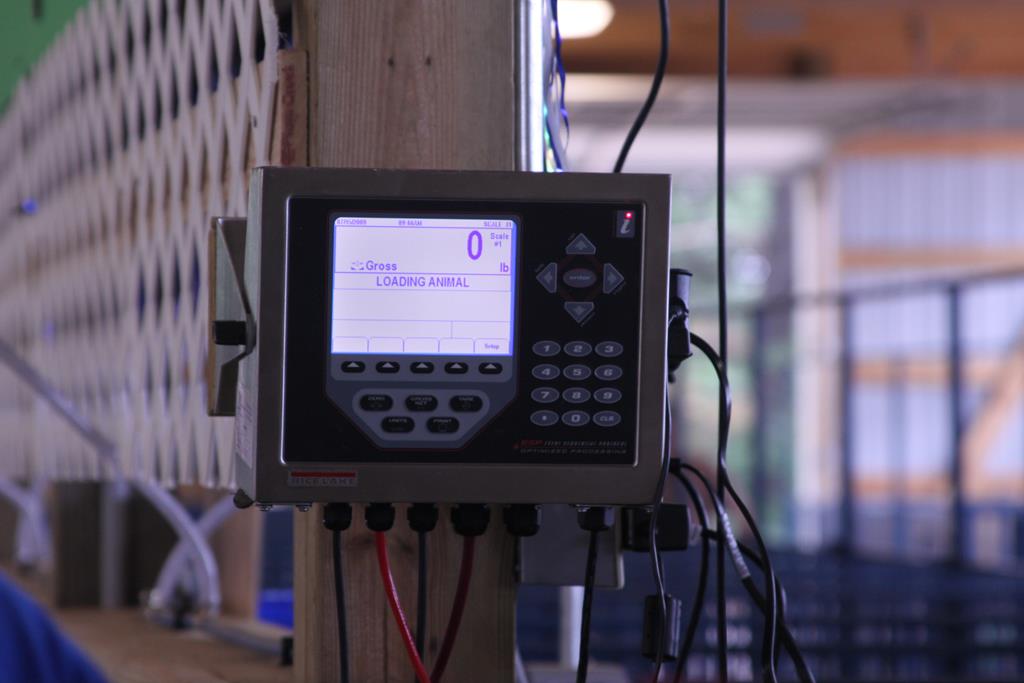
Dr. Onan performs ultrasounds for fairs across the state and country, but he’s never seen a setup like this. “I can scan and measure and scan and measure and not be waiting around. I am never waiting for an animal. At other fairs, most of the time I’m standing around as much as I’m working and that’s not efficient.” Between the beef, lamb, and swine divisions, almost 200 animals were weighed in just over seven hours, cutting the time by nearly half while collecting more information more accurately.
“A lot of fairs are using electronic IDs, and some are linked to the weight, but in a lot of cases they’re just reading it and hand-recording. In the typical fair scenario, I capture images and then have a helper entering IDs and weight into an Excel sheet. I sit down after I’m done scanning, measure the images, and export a text file into the spreadsheet. The electronic identification being linked to the weight and the scan data eliminates a huge source of error.”
Committee volunteers used to spend hours crunching numbers and compiling data. With all of the information in one program, printing out a spreadsheet for the weekend’s auction is a few clicks away. Auction-goers have information in hand for each animal including live rank, rate of gain, loin-eye area, back-fat depth, percentage fat-free lean, and quality grade: select, choice, or prime.
The equipment upgrade allows for safer, more humane treatment of the livestock, an increasing industry-wide concern. The volunteers’ jobs have gotten easier too. Having the results during the fair gives students more recognition for their work, making for a better exhibiting experience.
Swine Co-Superintendent Steve Sirek volunteers his time at the livestock exhibits, and remembers how things were not so long ago; a judge would make a decision about the animal at the live show. After the fair, that decision would be evaluated when the cut meat was inspected. Sometimes the two evaluations would match, sometimes they wouldn’t. That isn’t a problem now that ultrasound is being used.
Steve explains that this advancement is also helpful in the realm of biosecurity. In the past, kids were brought into the locker plants after the fair to view the carcasses, sometimes handling them. Now, that step isn’t necessary.
“This is the way the industry is going,” Steve adds. “When a farmer sells fifty pigs to market, they get scanned, and he gets paid based on the results of that scan.”
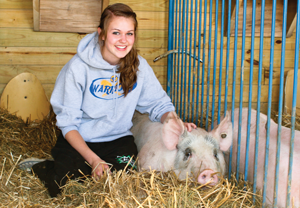
Steve talks about the benefits for the exhibitors. “In terms of the judging, the impact is for the kids. They have a lot more information about their animals after we’ve weighed and scanned them and printed all this out. They have better information about deciding which animal they want to have the judge rank. If they bring a couple of animals, they pick the one they think is the best.”
Dr. Onan understands the benefits of ultrasound beyond the fair. “One of the biggest single problems in the beef industry today is non-uniformity of product. There is a lot of variation, much more so than in the hog industry; little cattle and big cattle, well-muscled cattle and poorly muscled cattle. By using ultrasound to sort at marketing time you can decrease that variability a bit, which saves money through the whole marketing chain.”
The impact is huge for breeders, too. “Ultrasound has been done in the swine industry since the late 1970s. In the past ten years or so, the cattle industry has grabbed this technology and run with it. Many of the top breed organizations now do genetic evaluations on bulls and heifers using ultrasound scans.” Dr. Onan describes a flat line of progress during the genetic-based assessment of the ’70s and ’80s, and a major upward trend after ultrasound came into use. “We’ve seen tremendous improvement in carcass merit for those breeds now.”
Livestock committee member Larry Jerome, whose family helped found the company known today as Jennie-O Turkey Store, was instrumental in bringing Rice Lake on board. He jokes, “My life is a 4-H project.” But in all seriousness, the value to him is teaching. “It helps the student and parents understand how they ended up where they ended up, and what they need to do to make their animal more viable. This is the standard that is basically being adopted by the major industries, and we’re just trying to become more cutting edge. We were fortunate to find a business like Rice Lake Weighing Systems who has that same type of vision. It’s allowed us to do things that normally a lot of other fairs couldn’t.”