


 My Account
Is the website displaying in the correct language? Please confirm or select a different language.
Your region has been set automatically. Please confirm or select a different region.
Weighing Meat from Farm to Table
Weighing is a critical part of livestock handling, meat production and point-of-sale operations. Whether at the ranch, processing facility, shipping department or deli, weight should be captured frequently to ensure quality and compliance with food regulations.
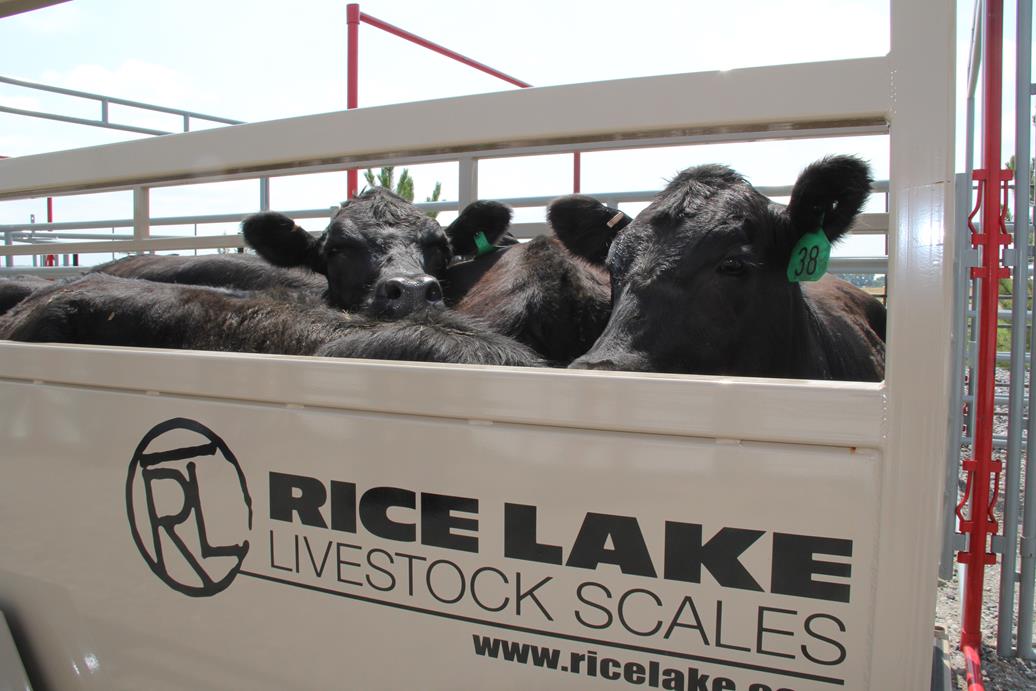
Livestock Scales for Animal Weighing
Livestock weighing is a crucial practice for ranchers. Cattle or hogs that experience frequent weight gain may be ideal for breeding, as they result in more meat and a higher return on investment. However, livestock that lose a significant amount of weight might have health issues. Weight can play an important role in monitoring animals.
Weighing livestock regularly can help farmers and ranchers decide if they should reduce or increase animal feed. Using weight to regulate amounts of feed can help ranchers save money and produce healthier livestock.
Effective weighing requires a highly accurate livestock scale to meet the unique needs of the agriculture industry. Livestock scales come in portable, mobile or stationary designs to suit different farm needs. Ranchers should consider if they need group or single animal weighing, mobility, Legal for Trade certification or other unique scale attributes.
Platform Scales for Food Processing
Platform scales such as washdown-safe bench or floor scales are frequently used in food processing environments, especially for meat processing.
Receiving
As soon as livestock reaches the receiving area, it’s weighed with a scale that is Legal for Trade, either NTEP or Measurement Canada certified. These certifications provide a standard of accuracy, letting processors know they have received what they paid for.
Processing
Weighing raw meat during processing is critical to assessing quality and classification compliance. Depending on the type of product and stage of processing, different scales may be used.
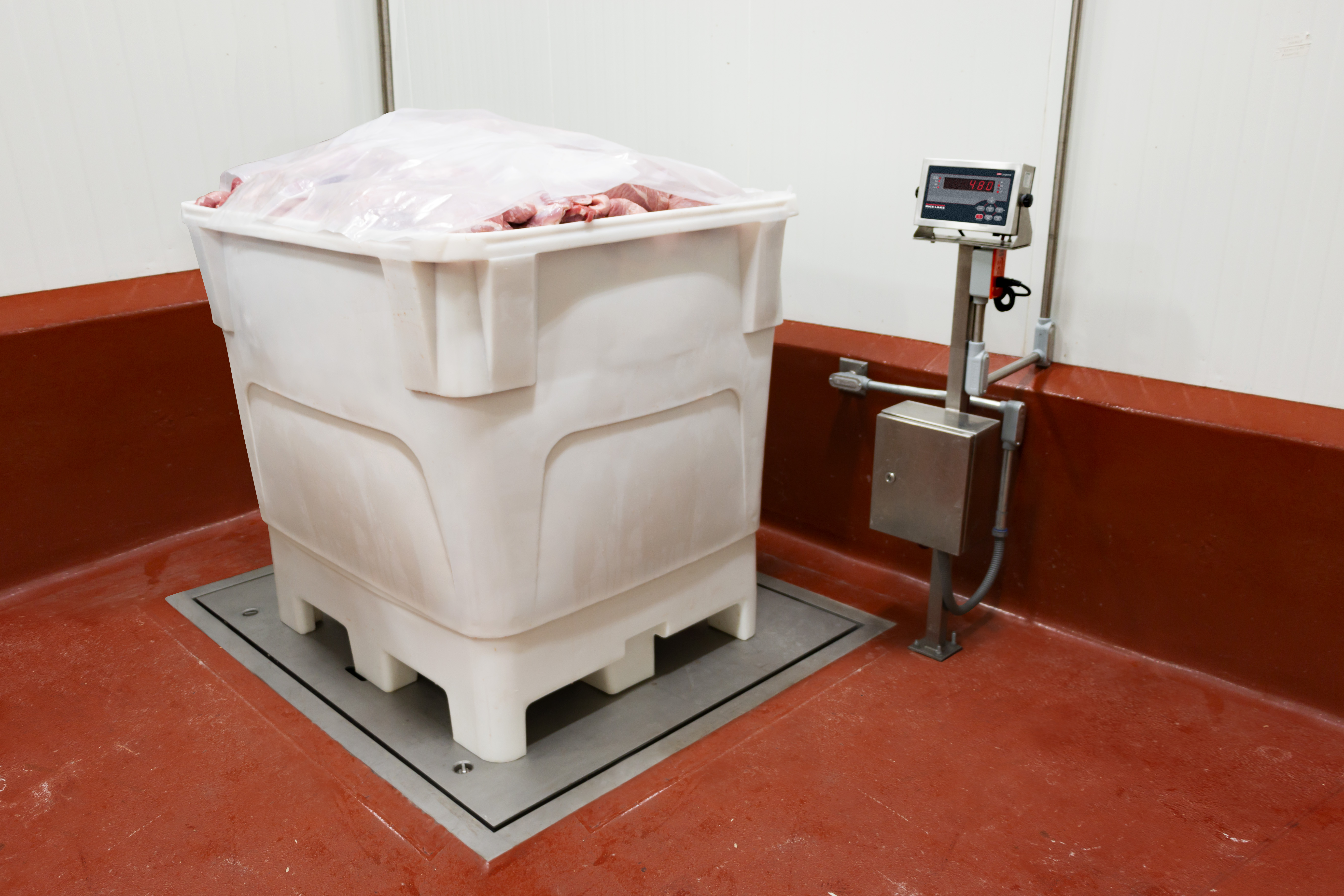
Floor scales weigh large items such as pallets or bins. Invest in a floor scale that complies with sanitary design standards and can sustain harsh washdown conditions, such as high-pressure water jets and chemicals, to avoid bacterial buildup and cross-contamination. While many industrial environments typically use mild steel floor scales, highly sanitary and washdown areas in processing plants require scales made of stainless steel.
Bench scales classify products by weight and are an excellent choice for performing quality checks. Designs with overload stops have added protection from shock-loading conditions. Bench scales are durable solutions frequently built with removable covers for easy cleaning and sanitation.
Checkweighers verify that products on the production line are not higher or lower than a predetermined weight, so customers get exactly what they pay for. Checkweighers can physically reject products outside the preset weight range to ensure each container legally has enough product without overloading. Optional metal detecting features can be used to prevent metal pieces from contaminating the product.
Dimensioners and Scales for Shipping
Before meat can be shipped, weight must be captured. If outgoing meat is sold based on weight, it must be weighed with a Legal for Trade scale. This could be done with a floor scale for large amounts of meat or a more compact scale, such as a bench scale, for small pre-packaged meat containers.
Once packaged meat is weighed, it’s sent to processors, restaurants and consumers. Keep in mind that raw, unpackaged meat should never be handled in areas where finished product is shipped out, as this can present sanitation and safety issues.
These outbound shipments must also be weighed to determine the carrier costs for shipments. Carriers base their costs on physical weight and dimensional weight, comparing the two and deciding on handling fees using the larger result. When shipping, automatic dimensioners reduce human error and streamline processing with faster calculations than manual measurements.
Additionally, if the meat is transported in a semi, it will be weighed on a truck scale to ensure compliance with regulations regarding vehicle weight on specific roads.
Retail Scales for Selling Meat Products
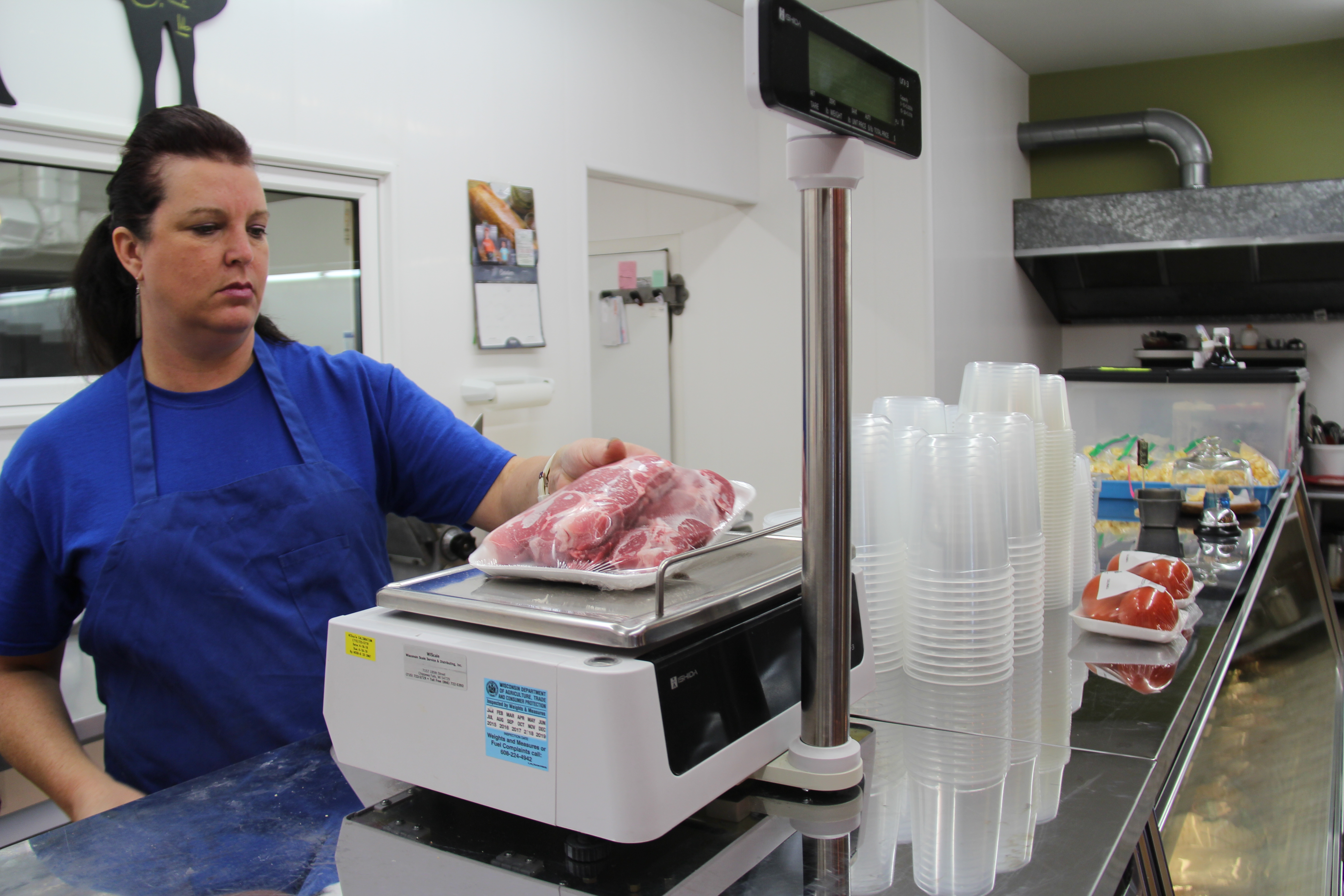
Because meat is sold to consumers by weight, retailers such as delis or butcher shops need highly accurate equipment to ensure both buyers and sellers are satisfied with the transaction. Legal for Trade price computing scales eliminate pricing errors, support on-demand price changes and showcase attractive marketing displays in retail settings.
By using scales that incorporate PLUs or SKUs, retailers can compare product totals from the scales to receiving invoices, ensuring what they receive at the back door moves through their POS system and out the front door. PC-based retail scales perform price-computing and labeling tasks as well, aiding in compliance with ingredients, nutrition statements and other food sale regulations.
Wrapping Products with Meat Wrappers
A customer’s first impression of a product’s packaging and presentation is critical. Neatly packaged and labeled goods are a must, as they are the first to fly off shelves. Film that is foggy, wrinkled or covering a damaged tray will cause customers to turn away. Products must be properly labeled with FDA and USDA required nutritional and handling information.
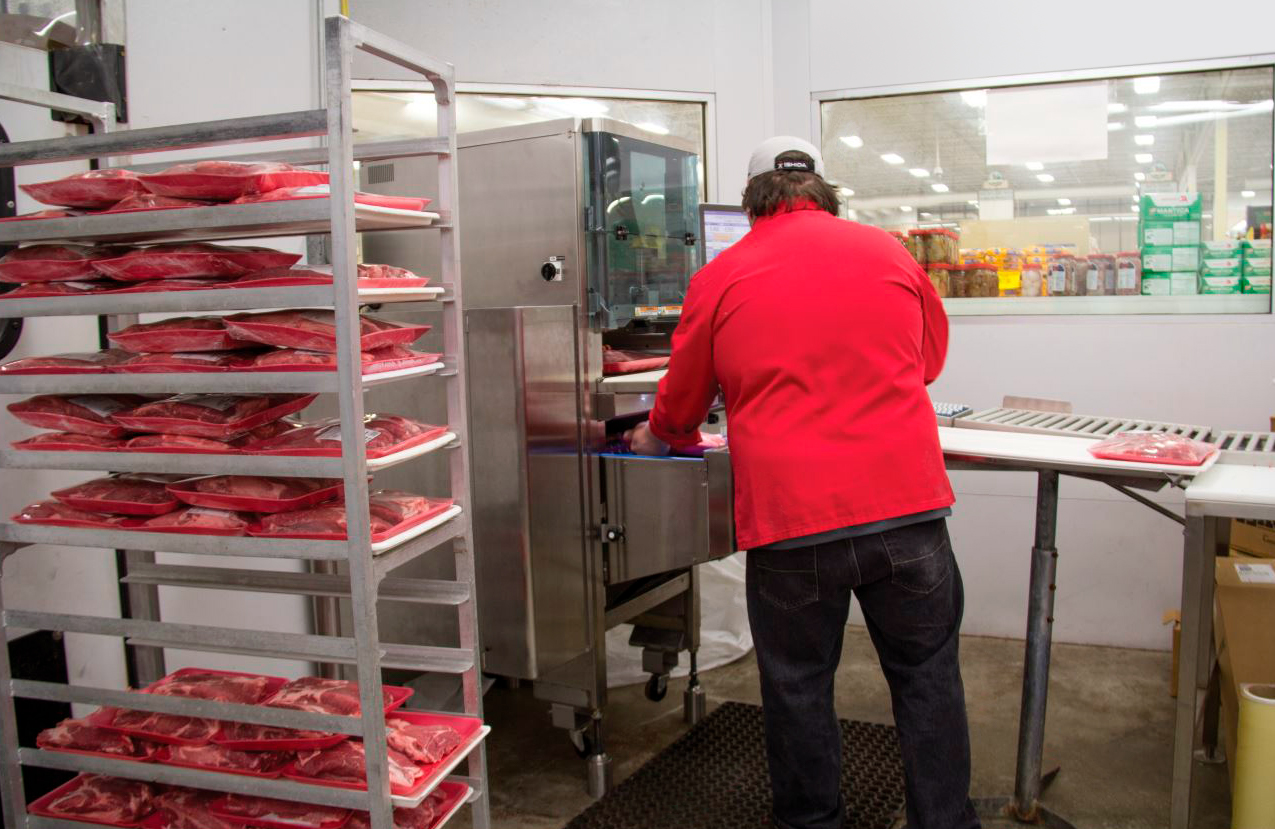
Meat-handling departments benefit from retail wrappers designed to wrap everything from beef and poultry to kielbasa and chicken feet. Depending on their space and cost requirements, retailers can choose between automatic wrappers and manual hand-wrapping stations. Automatic wrappers improve efficiency, while manual wrapping stations save time, space and money.
Ideal Characteristics for Meat Wrappers
Beyond wrapping capabilities, there are several important features that should be incorporated into a wrapper for optimal product look and feel.
- Elasticity: More flexibility eliminates unappealing wrinkles without putting tray quality at risk.
- Anti-fogging: Removing fog ensures customers can view the entire packaged product.
- Roll width: Improper roll width creates problems during the film forwarding and packaging process. Choosing a precise width reduces issues during wrapping.
Rice Lake Weighing Systems Has Solutions for Every Operation
Successful meat weighing and wrapping results in a high-quality product, generating customers and boosting business profits. Rice Lake’s durable livestock scales with mobile, portable and stationary models assist ranchers managing cattle. In processing facilities, RoughDeck® floor scales and similar platform scales ensure sanitary, accurate weighments. Throughout retail environments, Rice Lake partners with Ishida to offer quality scales and wrappers.
Rice Lake provides a complete array of solutions for meat weighing from farm to table with livestock, platform and retail scales. Discover more weighing solutions from Rice Lake to increase efficiency in your operations today.
Subscribe to Rice Lake Magazine
Sign in or create a Rice Lake website account to request a Rice Lake Magazine filled with application stories like this one be sent to you.
Account Sign In Create an AccountRelated Products
Related Products
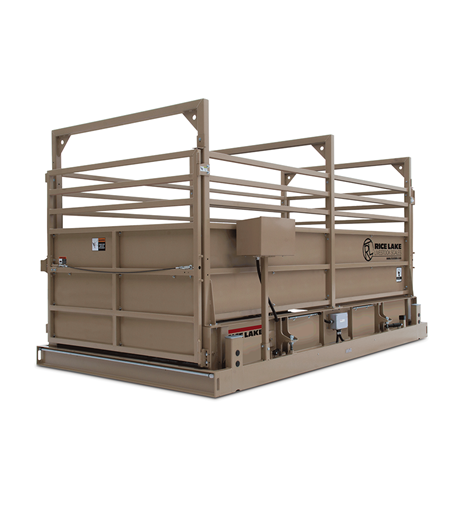
MAS-LC Stationary Animal Scale
The MAS-LC provides reliable, accurate weighing for ranchers and processors that prefer a load cell based weighing system.
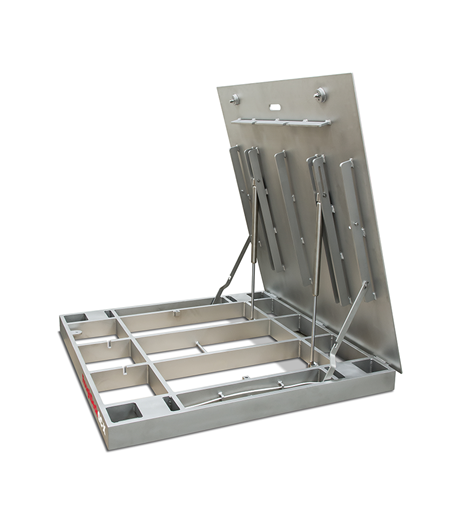
RoughDeck® QC-X Quick Clean Extreme Solid Base Plate Floor Scale
The RoughDeck QC-X is a quick-clean, washdown, stainless steel floor scale with a solid plate base and extreme degree of top plate lift. The RoughDeck QC-X is ideal for easy cleaning in environments requiring strict sanitation.
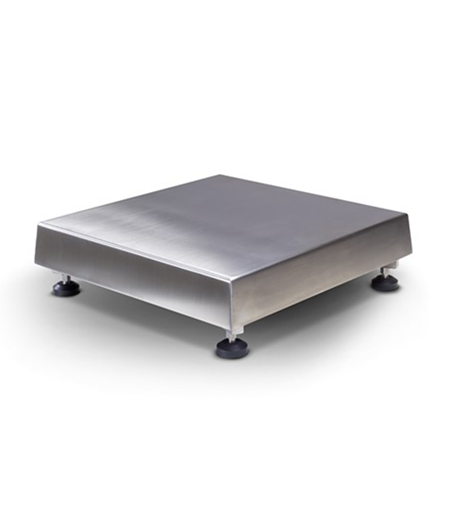
BenchMark® HE-X Hostile Environment Extreme Bench Scale
The BenchMark HE-X is a stainless steel, washdown bench scale with a removeable cover for easy cleaning in highly sanitary environments.
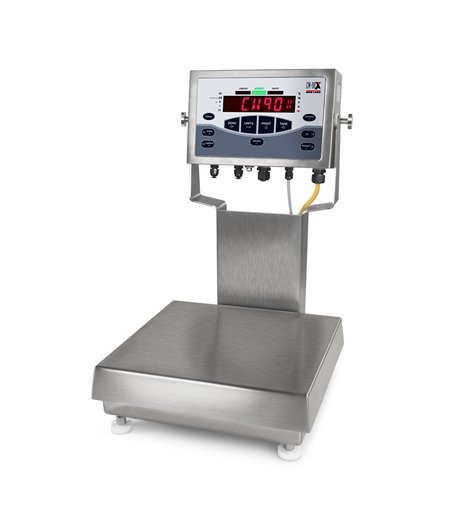
CW-90X Over/Under Washdown Checkweigher
Choose Rice Lake's CW-90X over/under washdown checkweigher for heavy washdown environments and HACCP requirements.
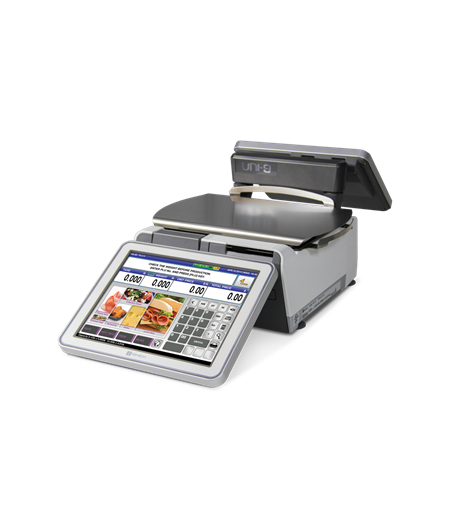
Ishida Uni-9 Series PC Scale
The Uni-9 Series delivers the gourmet experience in retail weighing and wrapping through a large, vivid display and advanced communication all in a more compact design.
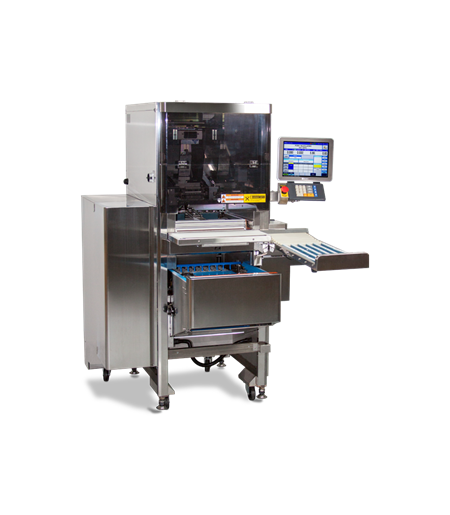
Ishida WM-Ai Automatic Wrapper
Ishida's versatile, PC-based WM-Ai automatic wrapper delivers space-saving efficiency while weighing, wrapping and labeling up to 35 packages per minute.
